Home • Blog • Mary's dogs • Quirky Places to Eat • Crafters
 Mary's latest novel – the 11th in the Rossington series – was published on 4 November 2025. Look out for Don’t Tell Tales! Visit your local bookshop or friendly crime specialist for a copy – or order it from our stockist
  Bodies In The Bookshop, Cambridge.
February 2026 January 2026 | December 2025 | November 2025 | September 2025
October 2025
31 October 2025
Three white ponies trotted in line down the slope of the old Haytor quarry, heading purposefully for the land bridge across one of the gullies. We stood and watched them step delicately across the rough stones and gallop up the far slope of the Black Hill.
A little later the continuous bellowing of cattle attracted our attention and we saw in the distance a landrover herding the Galloways off the slopes and along the lower lane. High up the three white ponies stood still, watching the scene just as we did.
Friday 24 October 2025
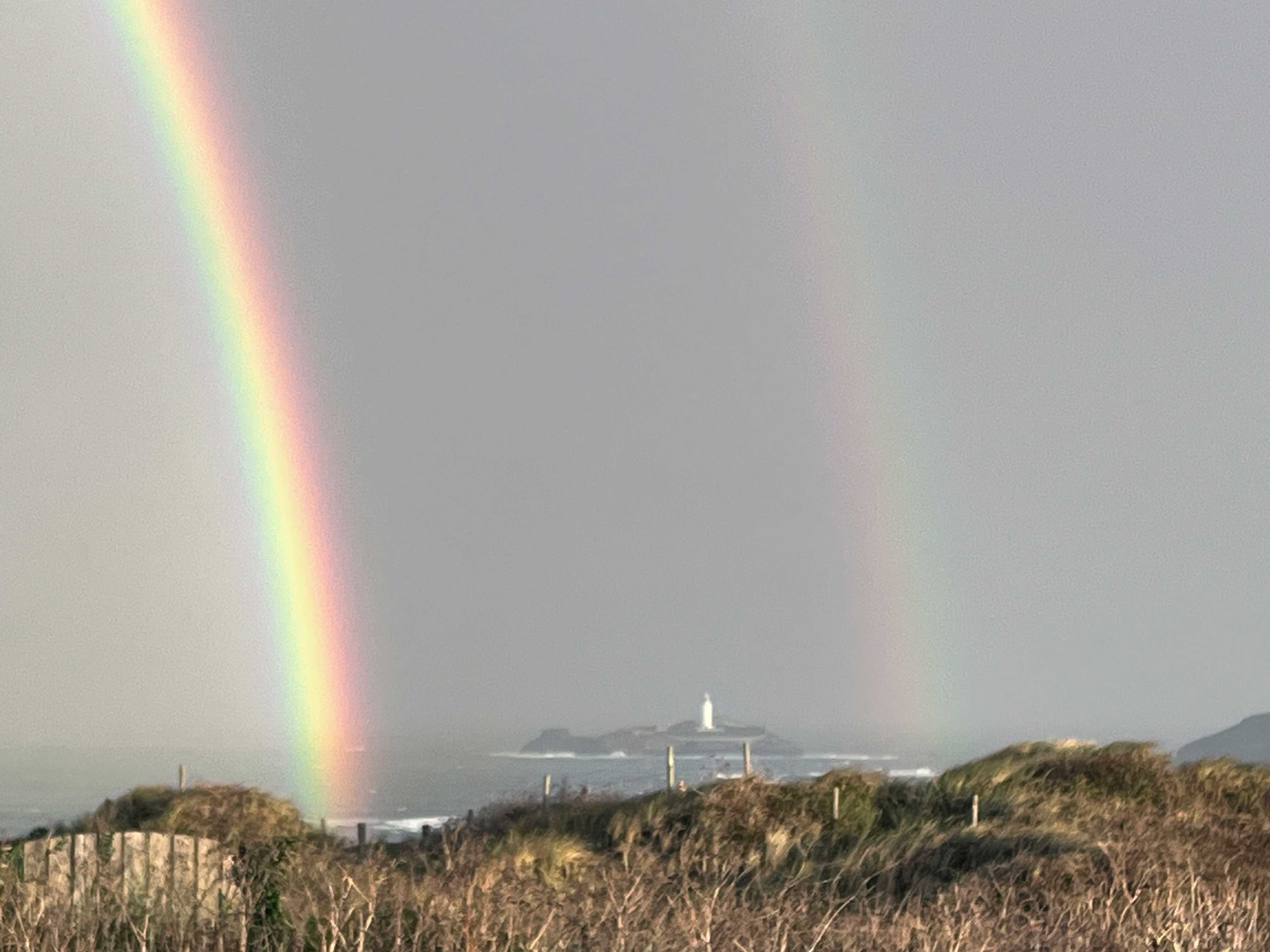
The night skies above the bay are often vivid with colours, and sometimes after rain there are rainbows framing Godrevy lighthouse

Wednesday 22 October 2025
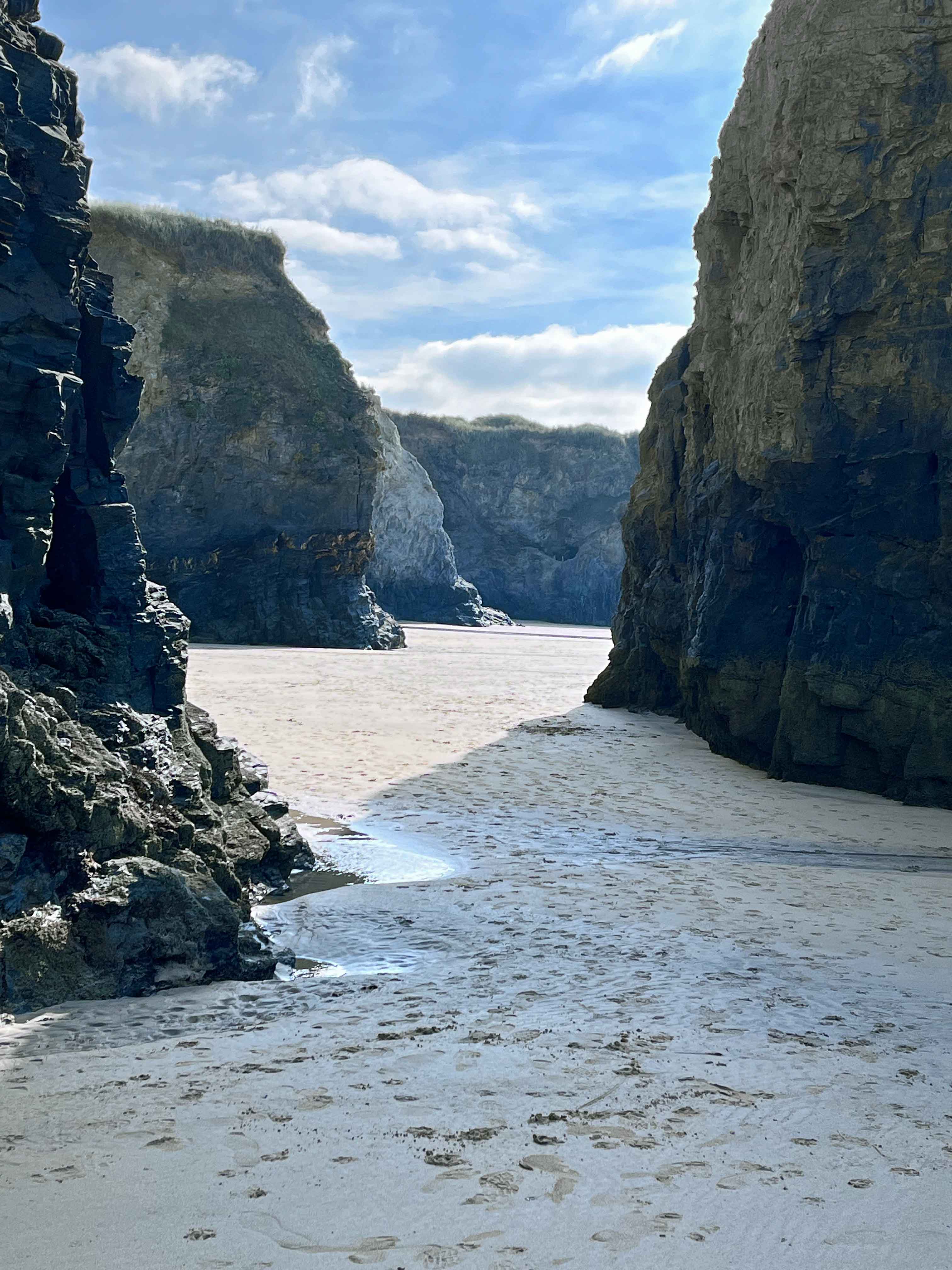
Over centuries of wind and rain and surging seas, ways have been worn through the rocks.
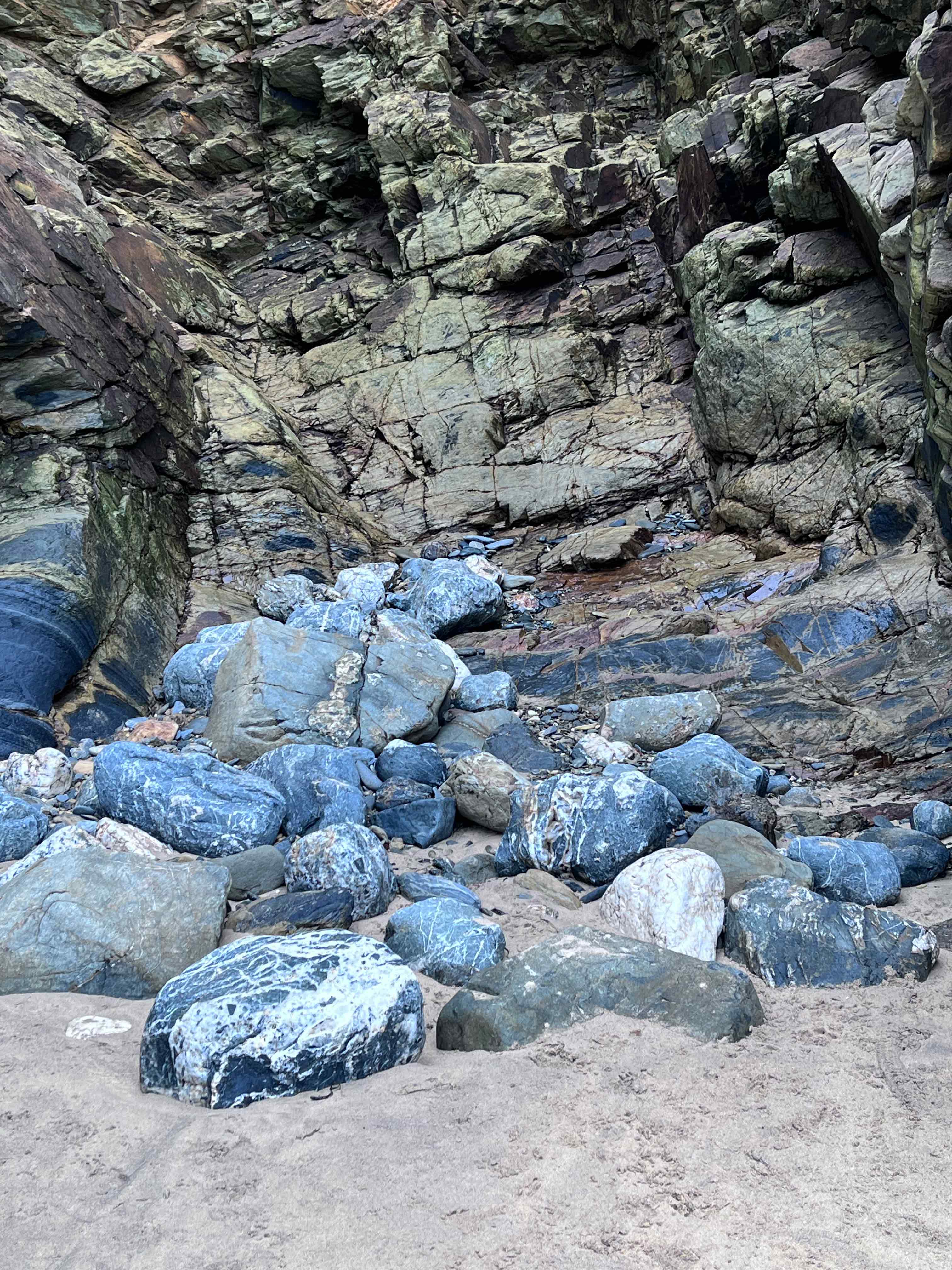
Rock falls often expose the different rocks within the cliffs.
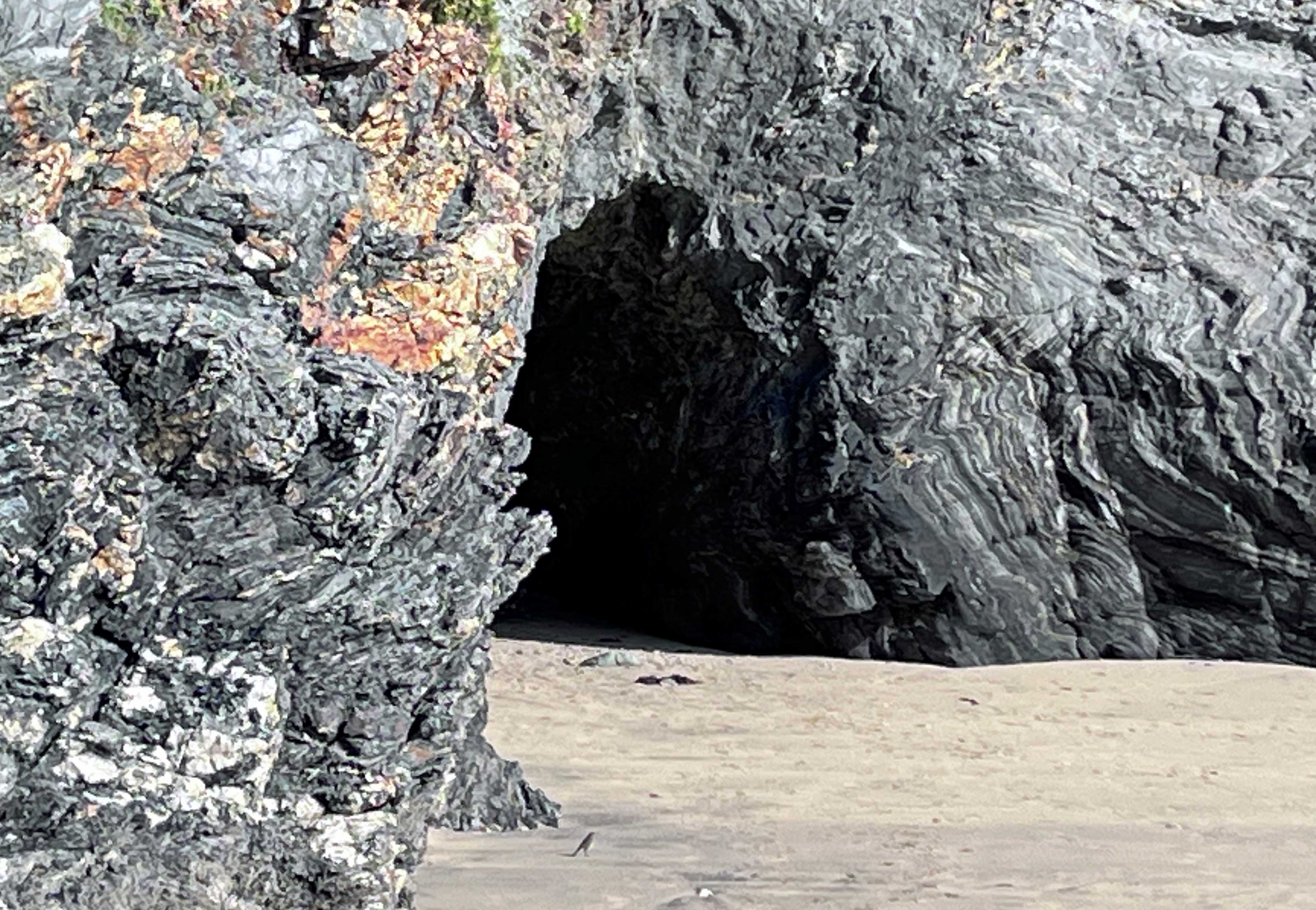
Different rocks thread through the predominant basalt of the low cliffs here.
Tuesday 21 October 2025
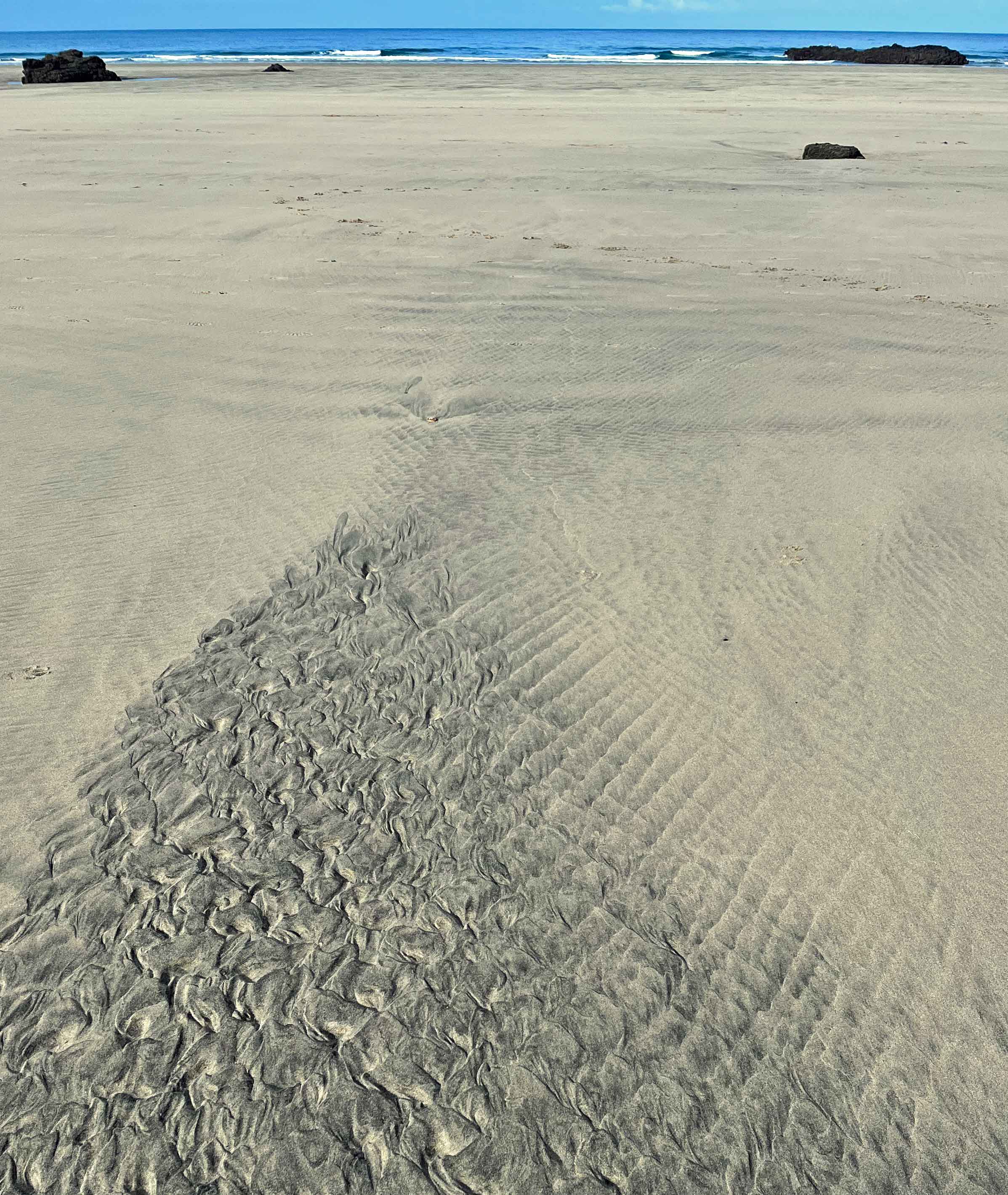
There are always patterns in the sand when the tide has gone out.
Monday 20 October 2025

The dark entrances to caves appear more enticing when the sun lights them up. But under gloomier skies they look more threatening, but this was undoubtedly an advantage to any smugglers who were interested in illicit landings and hiding places. The siting of a coastguard’s lookout hut on the cliffs above was not to just sound the alarm for ships in distress.
Friday 17 October 2025
There was an eerie howling as we approached the sheltered cove where the seals haul out. It sounded as if the ghosts of drowned sailors were warning us, or the seals. But the seals and my dogs were unconcerned, knowing the sound of the wind cutting through rocky crevices was no threat to them. 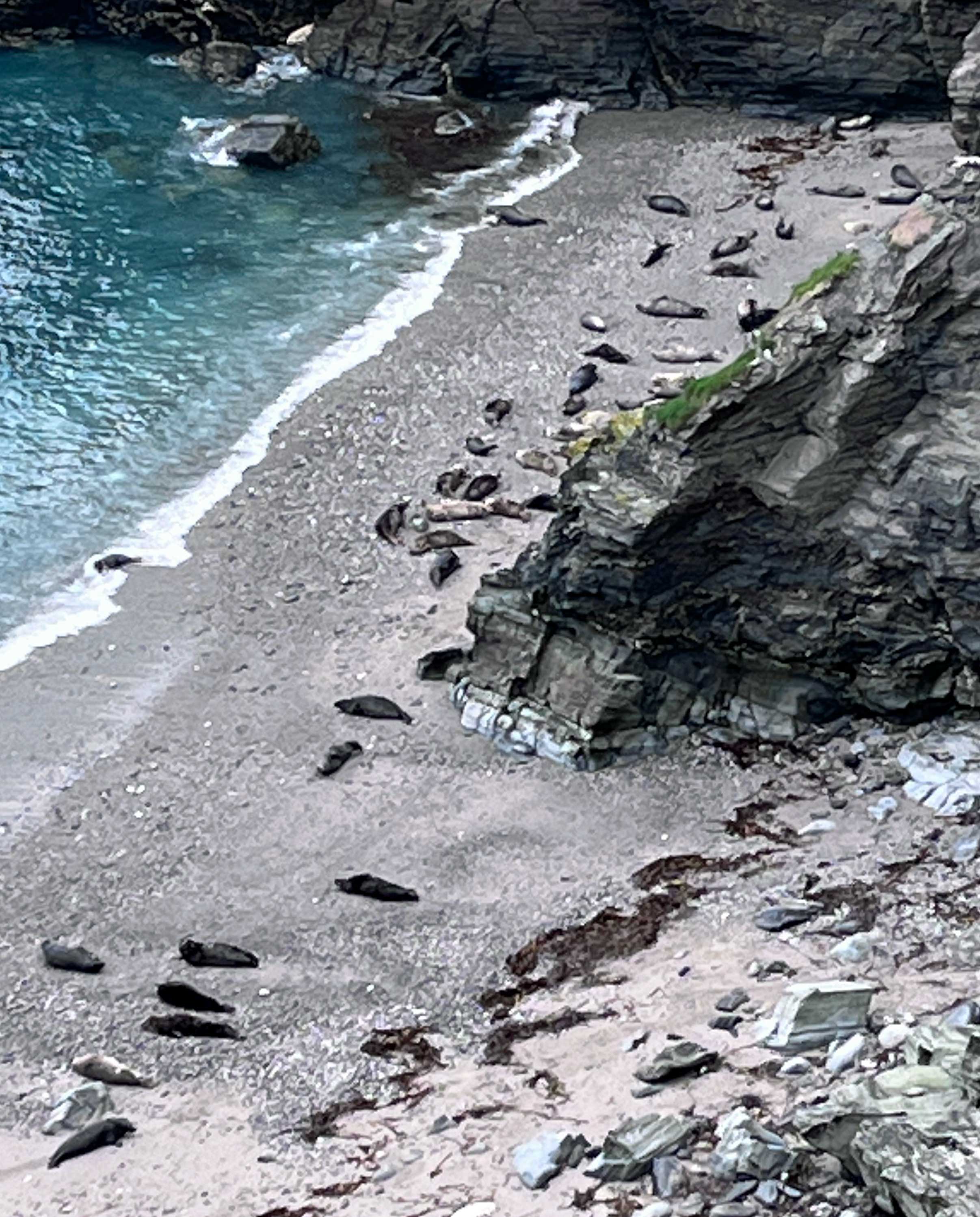 But it was an uncanny backdrop to the scene below where seals stretched out on the small rocky beach, occasionally rocking slightly and even more occasionally putting on a show of energy, undulating along to a slightly better resting place. And all the while we watched, more seals came, clearly visible in the crystal-clear turquoise waters as they approached the beach. And for every one that came, it seemed that another slipped back into the sea, swimming out to dive and resurface, perhaps in search of a snack.
Thursday 16 October 2025
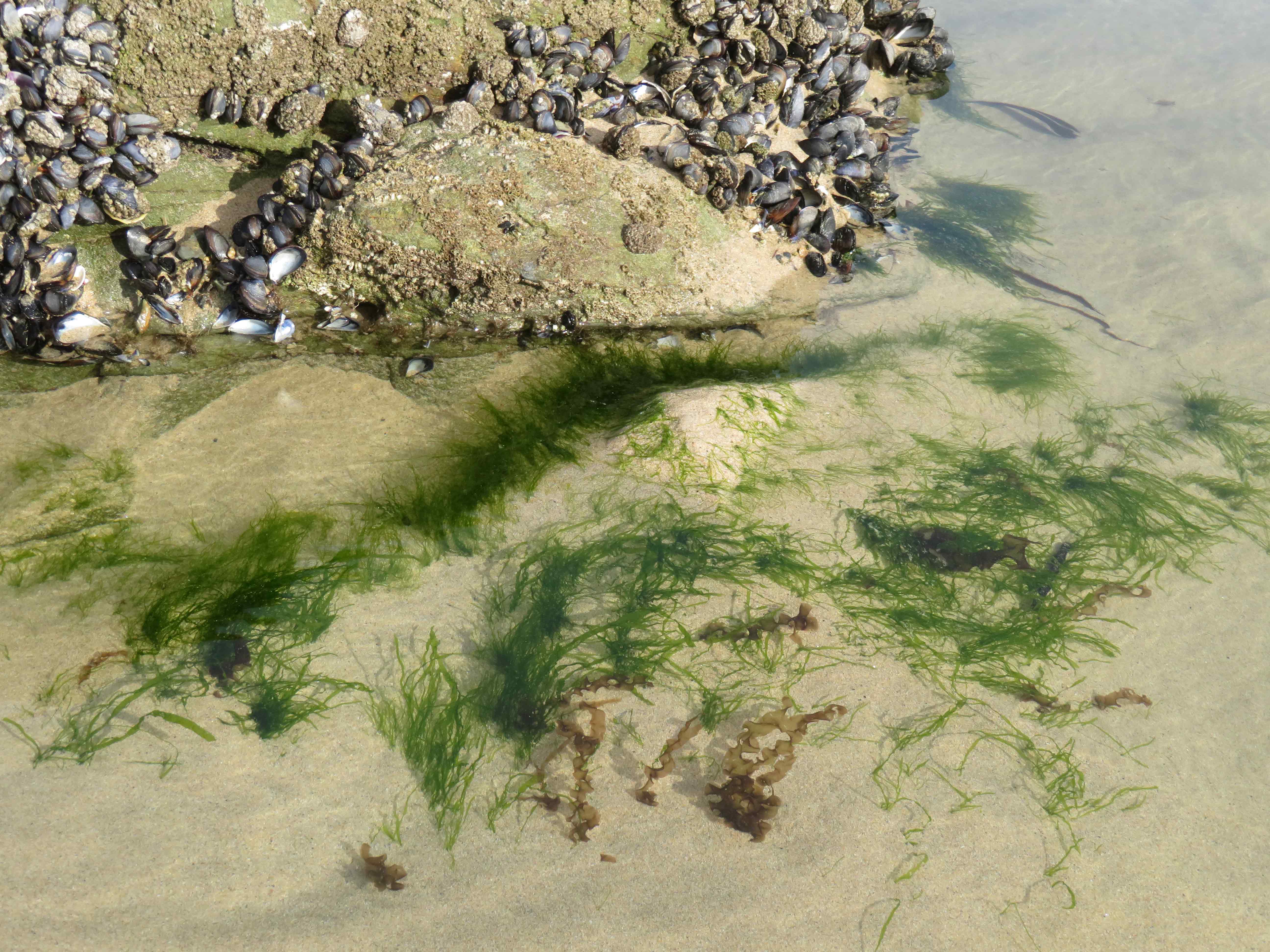
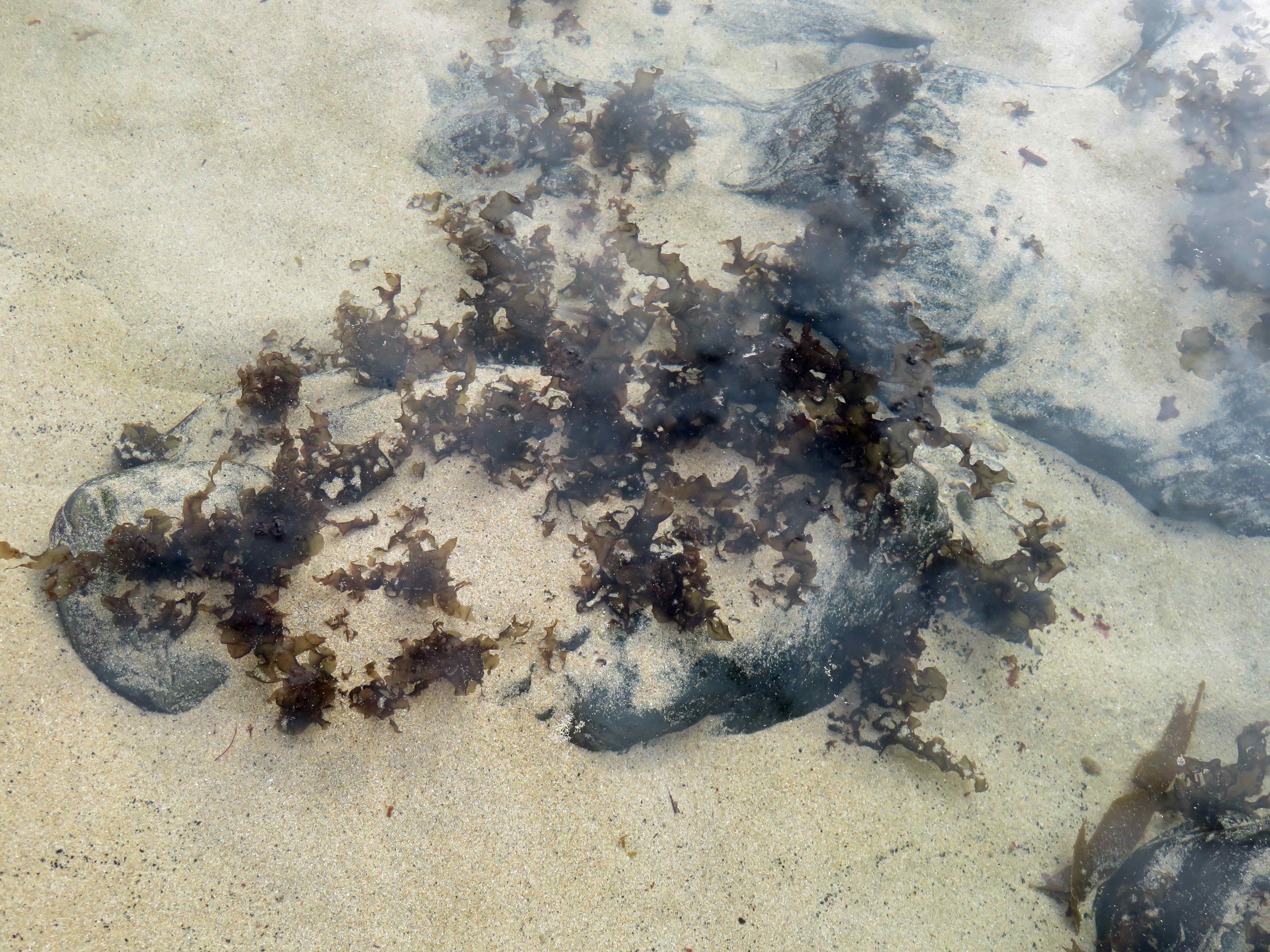
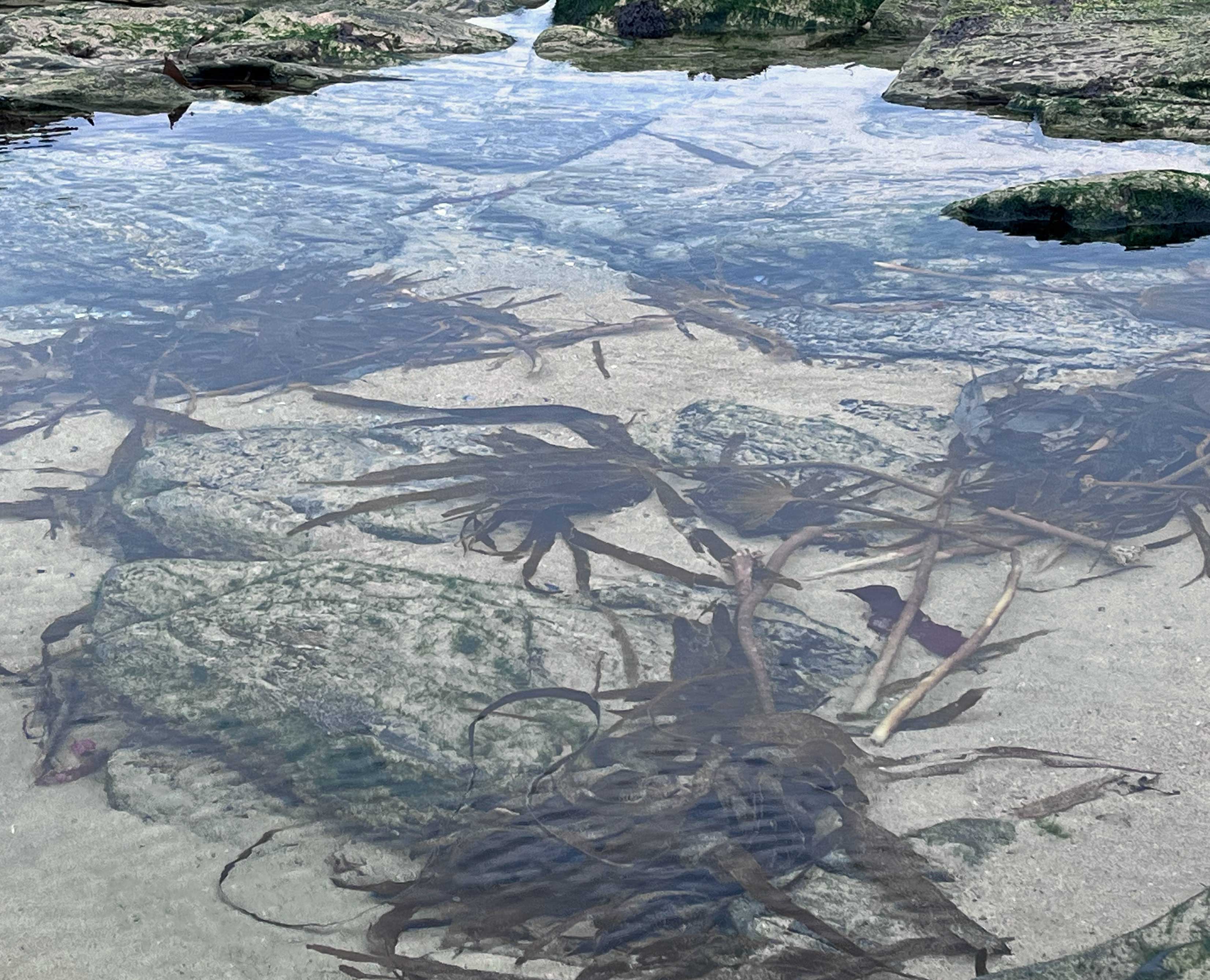
The rocks around the little beach shelter pools of limpid green seawater, often quite deep. The shallower ones have different kinds of seaweeds in them, drifting lightly in the breeze-ruffled water.

Tuesday 14 October 2025
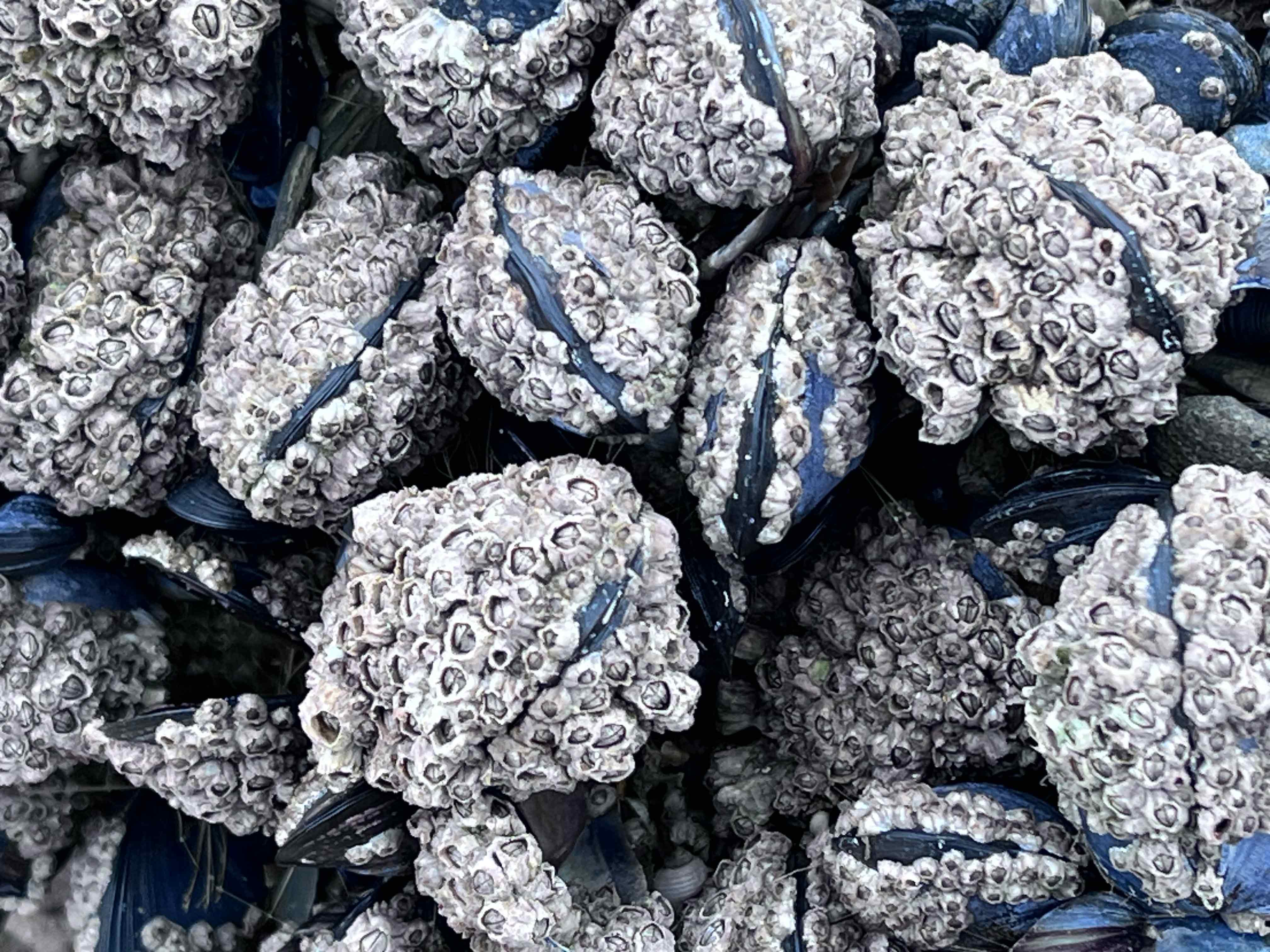
The little beach at one end of the bay was ringed with low dark rocks in the sand, most of them home to colonies of thousands of mussels. The mussels were themselves hosts to the tiny barnacles that covered all except the very young shellfish, which were a gleaming black compared to their elders’ crusty appearance.
Sunday 12 October 2025
The water was a uniform aquamarine as I sat on the rocks looking out over St Ives bay.
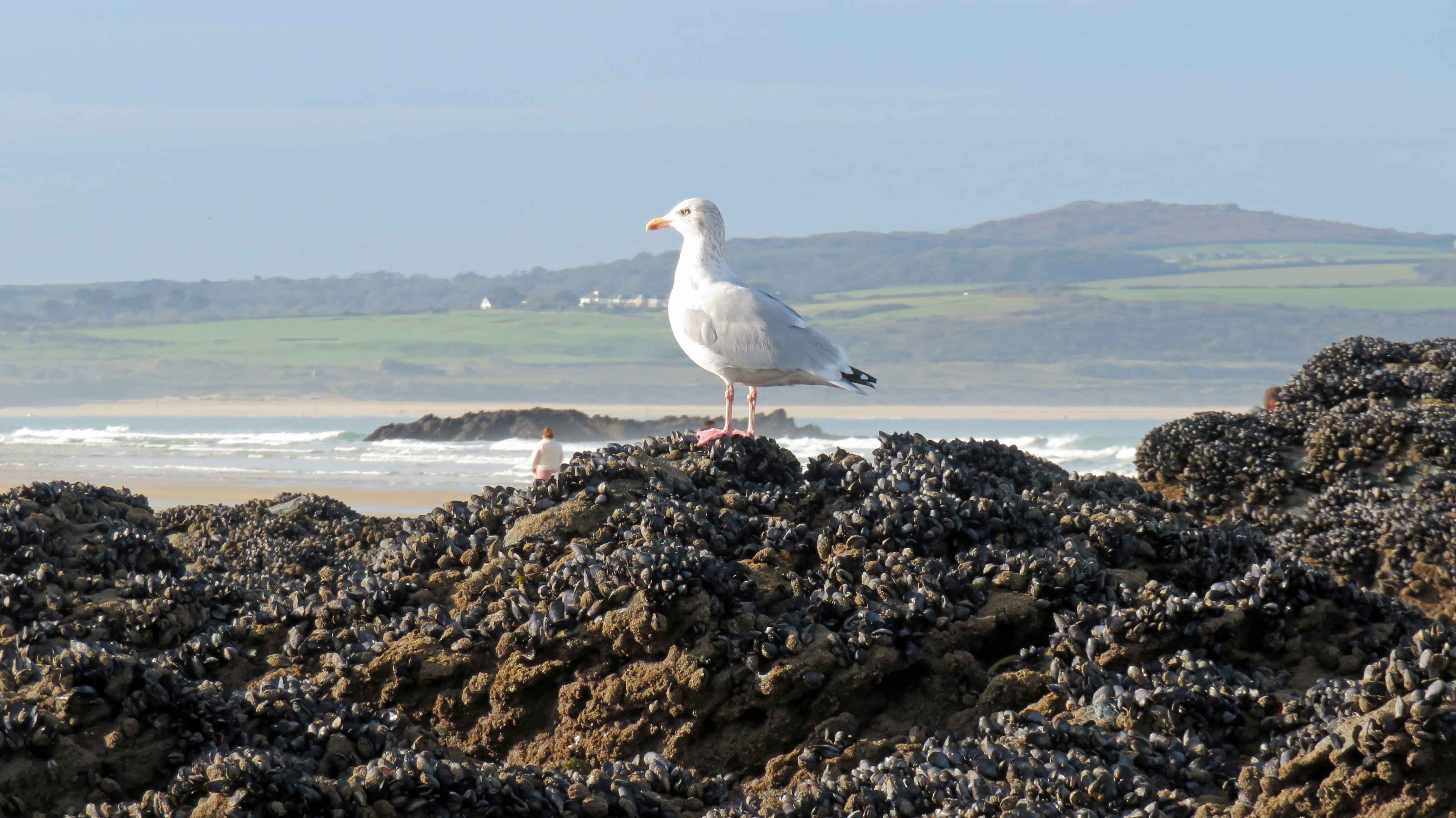
A seagull stood sentinel on a pinnacle of rock fringing the bay and a skirling cry heralded a flight of oystercatchers flying past the bay in a wavering line. The gull flew to the other side of the bay, perching beyond the oystercatchers which had settled on the rock ridge here like tiny, evenly spaced, avian statues.
Saturday 11 October 2025
Going through road cuttings on the A30 I was impressed by the supporting walls, a modernized version of the traditional granite walls, here with the granite set smoothly in concrete. I first noticed one of these walls as a small holly tree, bright with berries, was growing out of it. When I looked further, I saw there were a number of saplings emerging along the length of the wall, and a curtain of vivid green ivy.
Sunday 5 October 2025
The field where the dogs played was enclosed by a thick layer of mist, shutting out the hills and valleys that rise and fall around it. They were just faint outlines in the thick whiteness. The mist cleared in the middle distance while we were there, revealing the checkerboard of tree-fringed fields in light brown, dark brown and reddish-brown, with here and there meadows of very bright green, just one of them striped with brown.
Friday 3 October 2025
As we drove up onto the moor towards Haytor a mist mountain lay above a copse of trees, autumn hued in bright lemon yellow, bronze and russet.
On the back lane past Ashburton a pair of belligerent small birds were silhouetted, tails cocked high as they faced each other. One robin flew off as we approached, the other held its place triumphantly, taking one victorious step forward before flying off too.