Home • This month’s blog • Latest mystery • Mary's dogs • Quirky Places to Eat • Time for tea • Crafters
Classic-crime novelist Mary Tant writes, ‘I’ve never been able to resist a proper tea with home-made scones and cakes, in idyllic surroundings, so here are a few of my favourite tea places’. She starts in her favoured West Country, the setting of her Rossington series of mysteries.
The kettle's boiling…
Cornwall
Cadgwith, The Lizard
Picnic benches crowd the cobbled courtyard that was once the centre of the pilchard cellar in The Old Cellars. Small channels still show where the fluid from the pressed and salted fish ran away. Slender irregularly-shaped granite pillars hold up a slated roof over a third of the courtyard, screening a few tables, where once the barrels full of packed fish would have rested. And more than a hundred years ago one of the current owner’s great-great-great-grandfathers worked here, pressing pilchards.
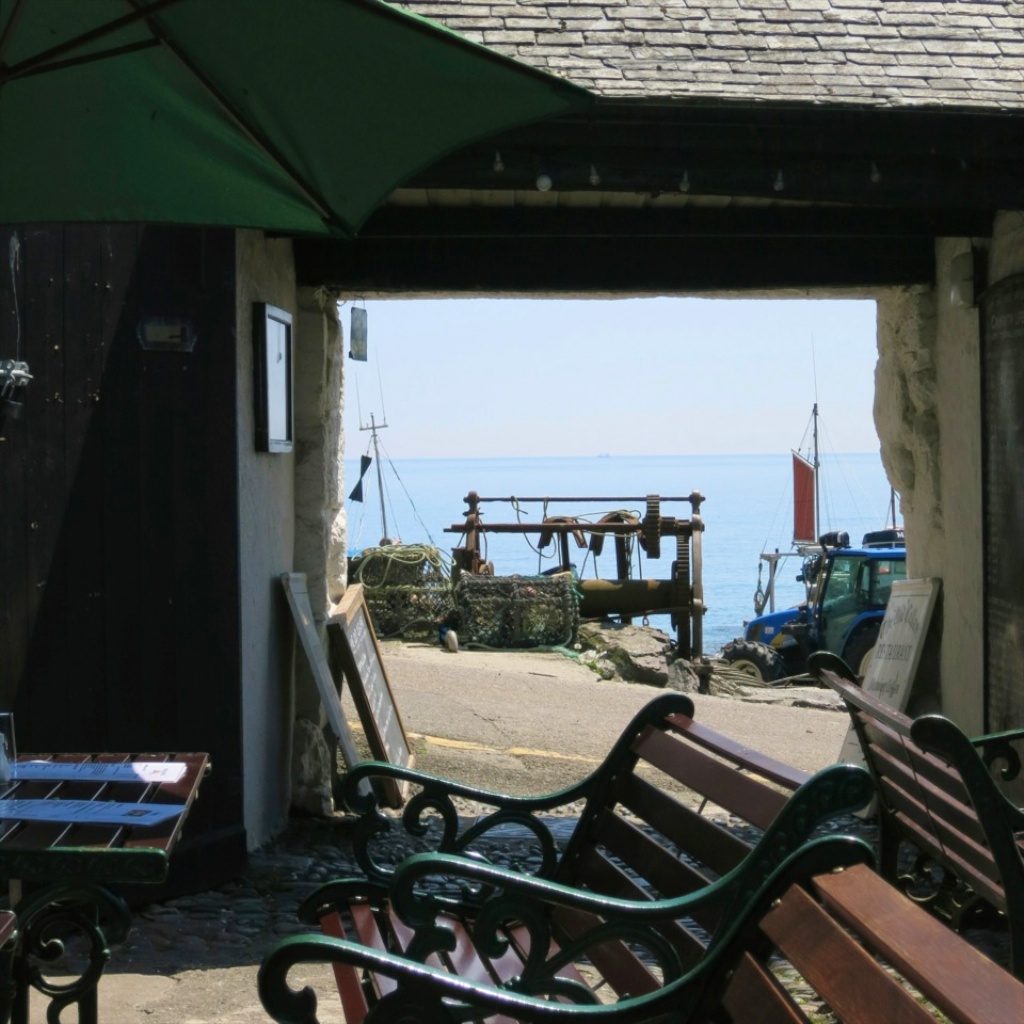
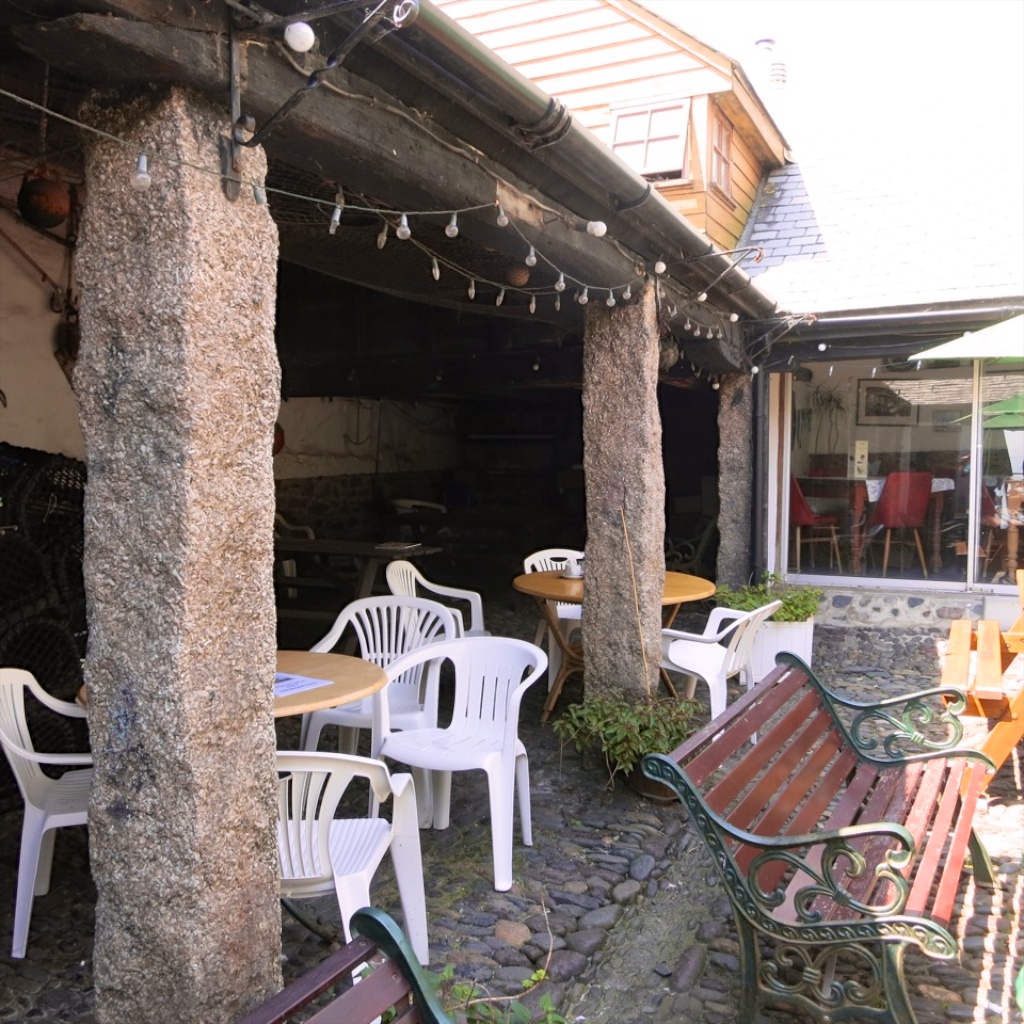
The view out of the doorway is still of the stony beach, with the winch house at the top, which sheltered the engine that drew the boats up out of the sea. When I was last there the boats were drawn up high and dry, the tractors that transported the catch were still and silent. A couple of older fishermen stood chatting, a younger one sprawled on the broad stone sill outside the winch house, all waiting for the tide to turn and the sea to come back in.
And sitting at one of the tables in the courtyard I could watch all the action without any effort. All I had to do was order my tea and chose between the cakes, Victoria sponge, chocolate fudge, lemon, carrot or brownies. Or settle for a homemade doughnut or warm fresh scone.
Constantine, West Cornwall
Beyond a steep gravel path through green lawns, a row of steps leads up to the tantalisingly glimpsed Glasshouse Café in the Potager garden. Chickens cluck beside the path, and a log wall provides a haven for wildlife beside the badminton net.
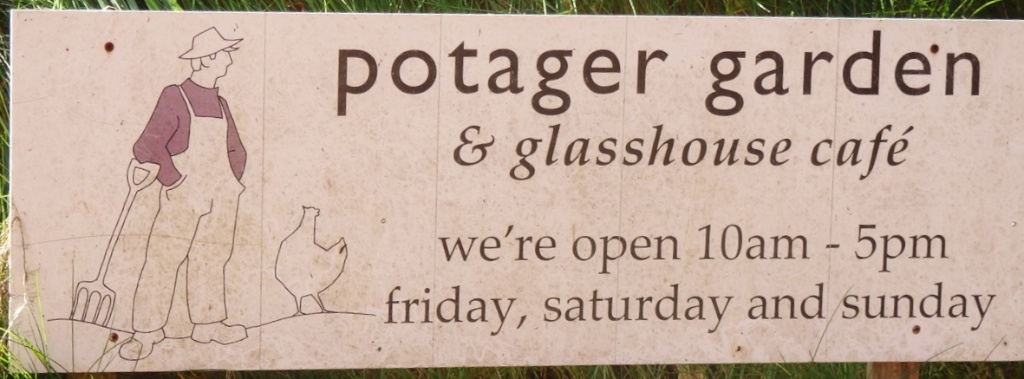
There was once a nursery garden here, left to dereliction and overgrowth before it was resuscitated as the Potager, a series of gardens around the two glasshouses that form the café. Flowers and fruit trees flourish here. Hammocks hang between the trees in front of the first glasshouse, an area where children can play and adults can lounge in comfort. There are carved wooden chairs ornamenting the gardens, and deckchairs sit waiting on one lawn for newspaper readers or general snoozers.
The first glasshouse contains the vegetarian kitchen – and the cake display. There is a mixture of wooden tables and chairs, each table with a pot of Scrabble bricks to occupy visitors. A vine grows overhead, bunting adds vibrant colour. And outside a long table fills the gap between here and the second glasshouse.
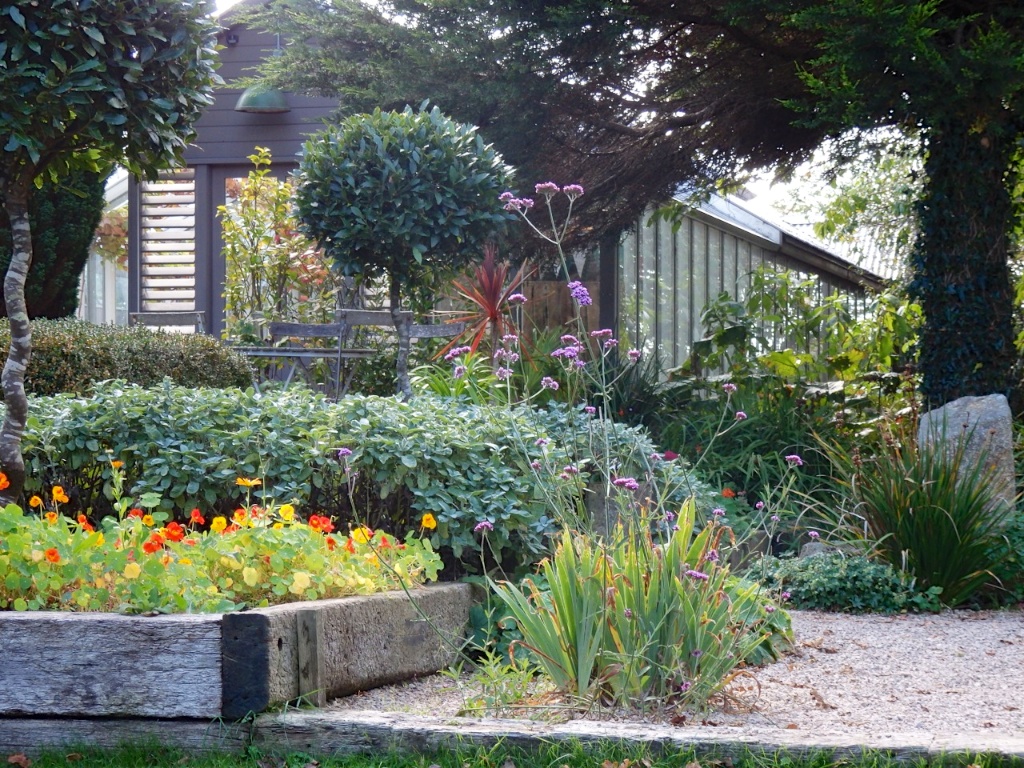
This one has long large tables too, including a table tennis one, so that the gentle ping-pong sound reverberates through the space and out into the upper gardens. It’s greener here, with more luxuriant tropical growth – and the prickly shapes of cactus.
Cake can be eaten in either glasshouse or outside, but chosing which one is the hardest decision of all. The café is famous for its almond and elderflower cake, which is usually available, but the others are delicious too, and there are changes every time I visit – most recently there were chocolate and orange, coffee and date with a mocha topping, lemon and poppyseed, courgette and chocolate, chocolate fondant. Perhaps a touch of the appeal for me is the prevalence of chocolate.
Lizard Point, West Cornwall
I really should be glad I don't live close enough to go to Polpeor Café every week. As it is, when I am staying nearby I have been known to slip in every day. Fortunately it can be reached on foot over a variety of distances and routes, many of them cliffside ones, which should help to counteract the effects of endless eating.
The café is owned and run by Peter Hendy and his wife. Peter used to farm nearby, and I'm glad he changed careers, otherwise I wouldn't be endlessly torn between his huge light-as-air meringues, his spicy Cornish heavy cakes (if you've never had them before, do sample them here), his scones… The list of delicious edibles goes on, and even includes sandwiches, and when I'm particularly greedy and unable to choose I buy to take home the things I can't manage to eat at the café.
Even if the food weren't so wonderful, I'd have to go here for the café's setting. It's right on the tip of Lizard Point, above the old lifeboat station, with sea stretching away on both sides. Sitting outside, with my collie lying under the table, I've watched the light changing on the water, seen seals' heads bobbing up like the fishing buoys that mark the bay, and watched choughs swooping across the cliffs.
Walking westward after tea on one occasion I stopped on the neighbouring promontory and saw dolphins passing by out to sea. Another time I was puzzled at the large number of walkers I passed, until one of them mentioned that there had been a chough sighting. Rounding a headland a little later and walking across a wide expanse of rough turf I surprised two of the birds, which had clearly eluded their pursuers. They were prodding the ground around a rampart of gorse bushes, their bright red legs and beaks a vivid contrast to their black bodies, and quite without human followers.
All this to enjoy, and a superb tea on hand too. That's a brilliant way to spend time.
Morwenstow, North Cornwall
I first came here as a teenager, persuading my family to explore what was to me then Grenville country – once famous as the home of Bevil, who died so gallantly for King Charles I, and of his less reputable brother Richard, made immortal by Daphne du Maurier's novel, The King's General.
It was only on repeated visits that I came to know Hawker, eccentric rector of the local church, whose fame was of a later period. It was acquired chiefly as an antiquarian and writer, particularly of 'The Song of the Western Men'. The churchyard still held figureheads from shipwrecked ships, marking the graves of their unknown sailors.
I came to know well the tearooms at Rectory Farm, next to the church and rectory. But for many years I travelled further west, and have only recently come back to this area. But the tearooms still feel now, as they did then, as if I've actually walked into the farm as it was, with its white walls, granite floor, wooden beams and open brick fireplace. Especially as there's often a collie visiting the front garden from the working farm next door.
But the people sitting at the curved settles or on farmhouse chairs at round wooden tables have more leisure than the original inhabitants. Today's visitors relax against red and white gingham cushions, admiring the collections of vintage china jugs and teapots, investigating the family photographs, often of weddings.
The same family has owned and run the tearooms for many years, and they have brought together a fine selection of local suppliers. The Cornish tea estate Tregothnan supplies many of the teas, including Kamelia Chai, based on a traditional Indian recipe. There's Smuggler's Choice, mixed at the farm, its name commemorating one of the historical local activities, and hinting at the underground passage said to run from the cliffs to the church.
To eat there's a wide selection of food. Cakes can be seen on the dresser by the door – chocolate fudge, lemon drizzle, sultana teacake were there when I last visited. The gluten-free options are extensive too, probably the widest I've seen in tearooms.
My favourite though is the savoury tea with a cheese scone and a choice of three cheeses – one of which last time was Cornish Gouda, made with honey and clover. All this food to eat, a table crowned with daffodils, and I sat there for ages, as the years dropped away and I was fifteen again.
Mousehole, South-West Cornwall
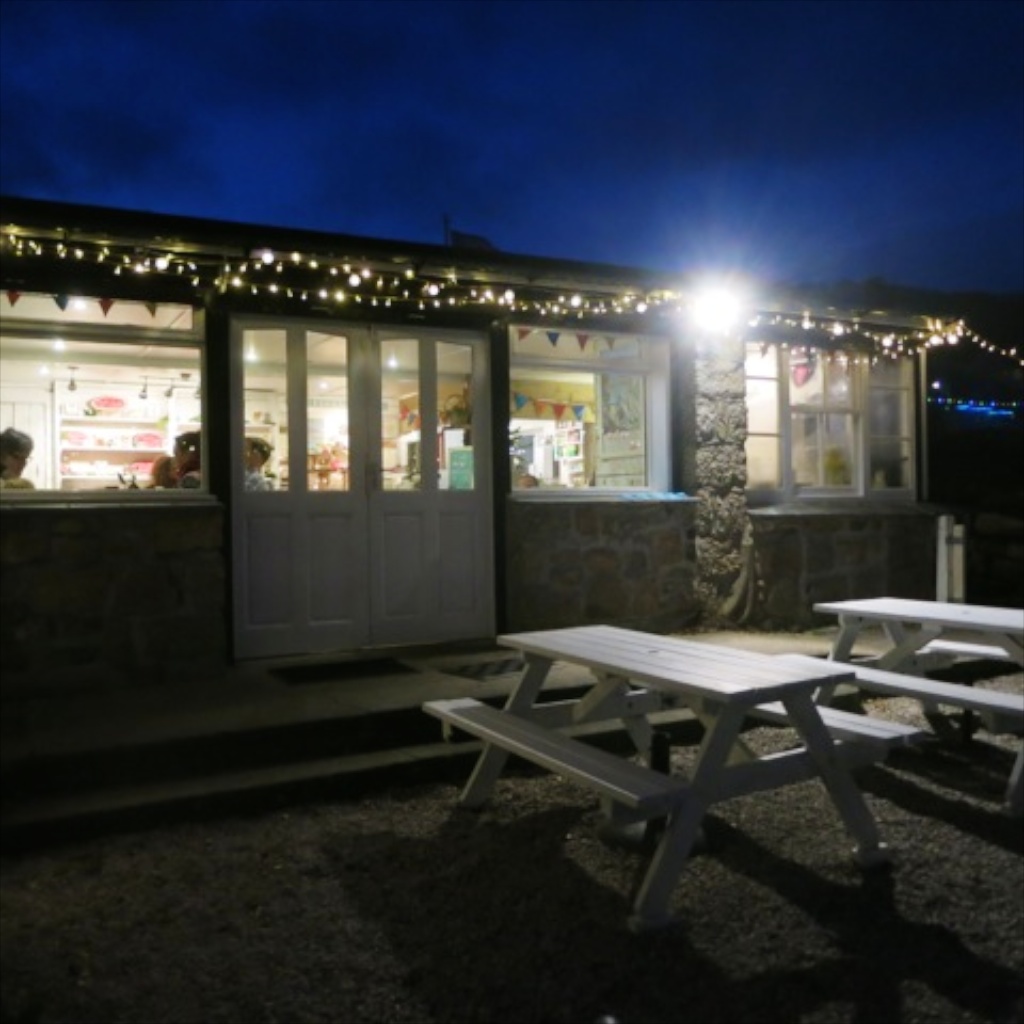
The low walls and roof of the building between the car park and the sea give no idea of what you’ll find if you visit the Rock Pool Café. 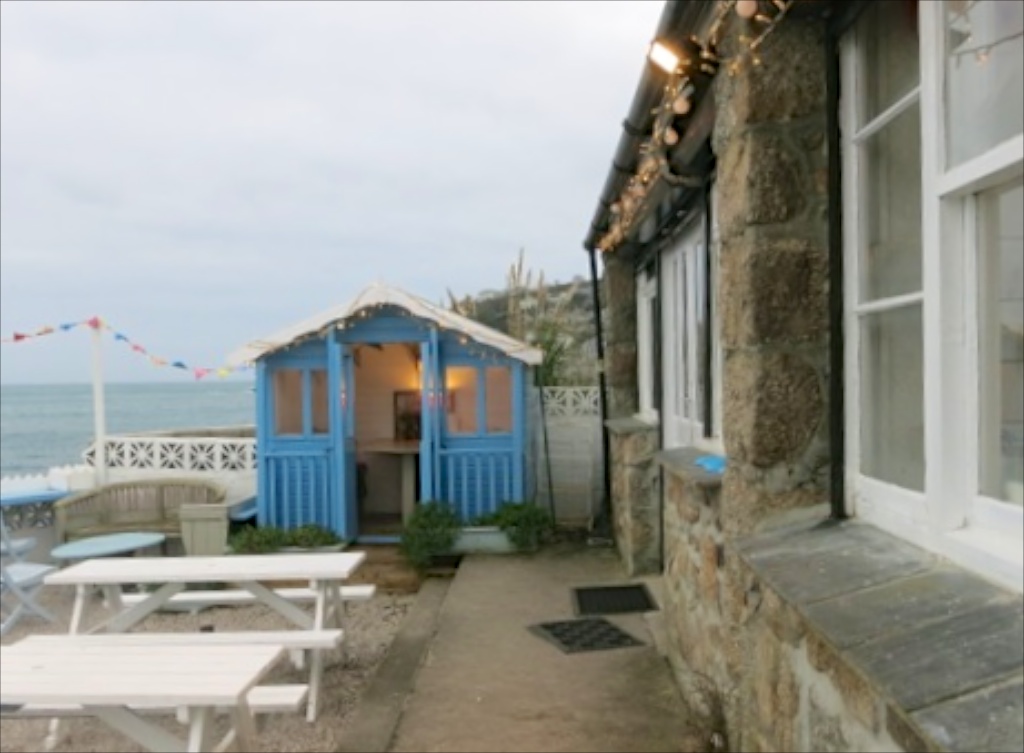 Go round the side to the sea frontage, where there are wide windows in the granite wall that overlook the gravel terrace and the sea. There are a few picnic benches and a small summerhouse, there’s bunting fluttering in the wind, and fairy lights beginning to twinkle on the tearoom. Stand at the edge of the terrace and feel surrounded by sea, with a view across to the nearby island, dominated at Christmas with a lighted white cross. To the right is the village itself, the harbour and hill beyond bright with the colours of other Christmas lights.
Inside there’s a feel of summer beside the sea, with light painted walls and tables, a mixture of chairs – wood, metal, wicker, benches, a comfortable sofa. With railway posters on the walls and knickknacks on the dresser, it feels like a huge beach house. One with a stove making it cosy for winter, and Christmas decorations on the tables.
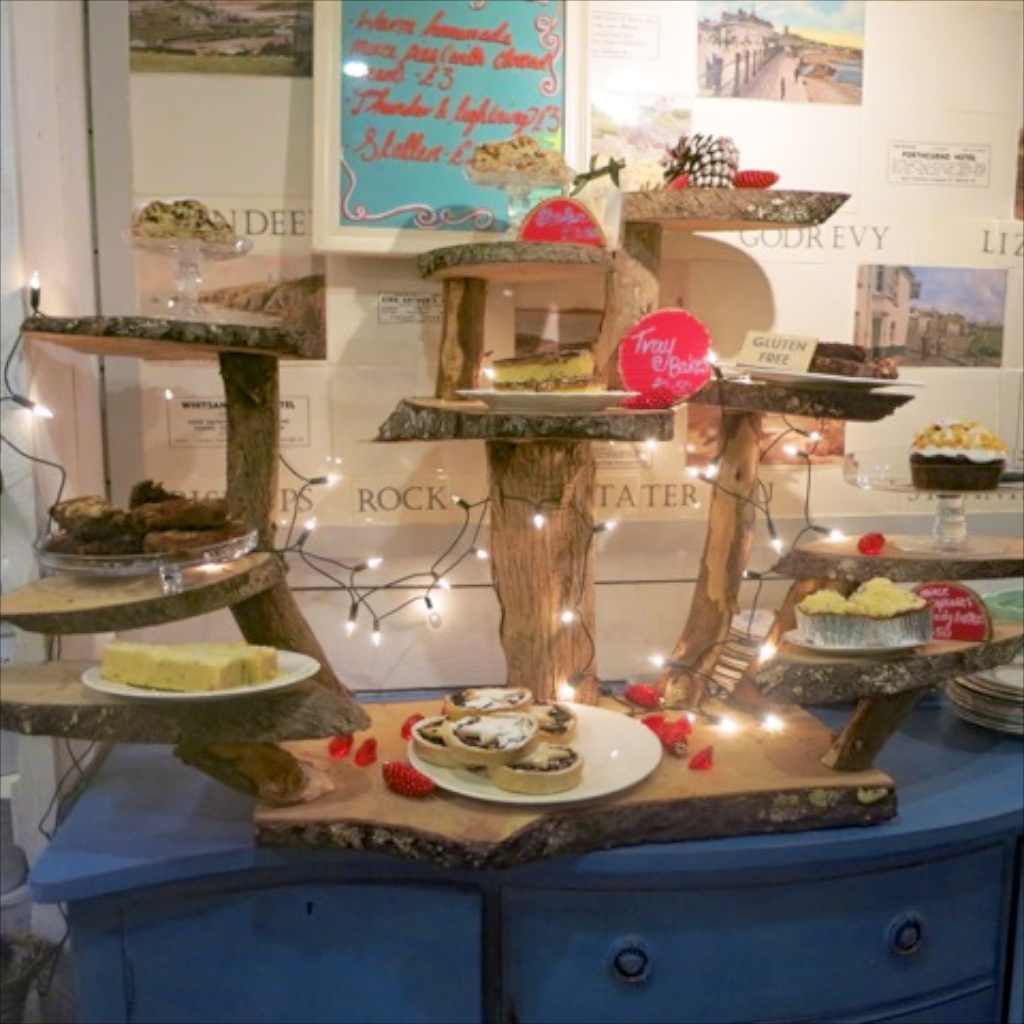
And it’s a beach house where somebody else has laid on a tea with delicious opportunities. A stand of wooden offcuts offers seasonal mince-pie cupcakes, rosemary shortbread, gingerbread and brownies. Tea comes from the selection on the shelves behind the counter, served in dainty patterned china cups.
It was busy for the whole time I was there, but the atmosphere was so relaxed that I could have sat for ages over the very good shortbread. With the view over the sea, watching the day gradually turning to night, illuminated by the decorative lights, it was very difficult to drag myself away.
Mullion Cove
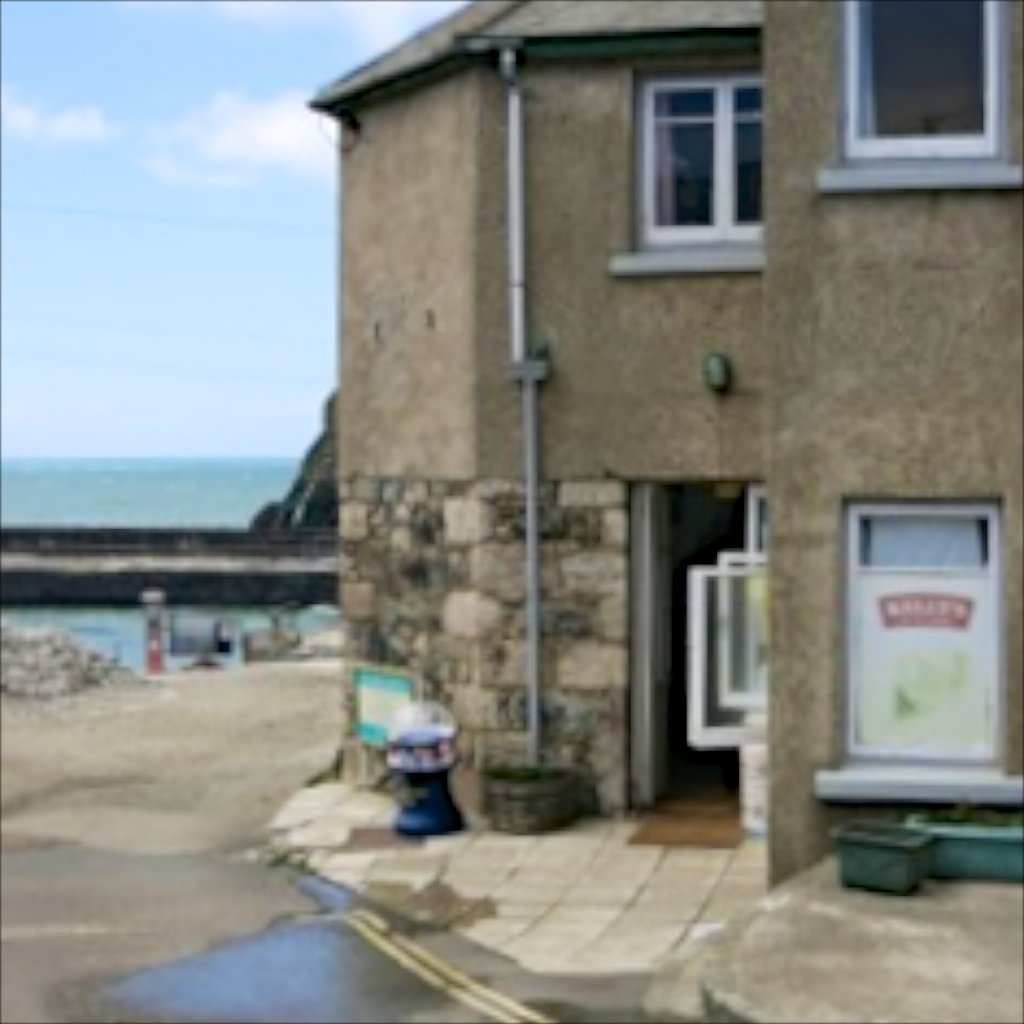 Heaps of lobster creels, piles of rope, a small pale blue boat outside a cottage. The smell of salt in the air, the sight of the sea glinting in the sunlight beyond the little square high-walled harbour. Gulls wheeling overhead, circling higher and higher above the grassy height of the cliff opposite The Porthmellin Tearoom.
I’ve known this scene and this tearoom for many, many years – as the end point of a regular walk over the cliffs – and although it’s changed hands since I was last here, the welcome is as genuinely warm as it ever was.
Perched conveniently at the end of the quay, with views over the harbour and out to sea from its windows, it’s an inviting place to sit and just contemplate the scene. Or to chat to others who are there, for it’s that sort of place – the owner talks to you, the other customers talk to you, and an air of conviviality reigns. 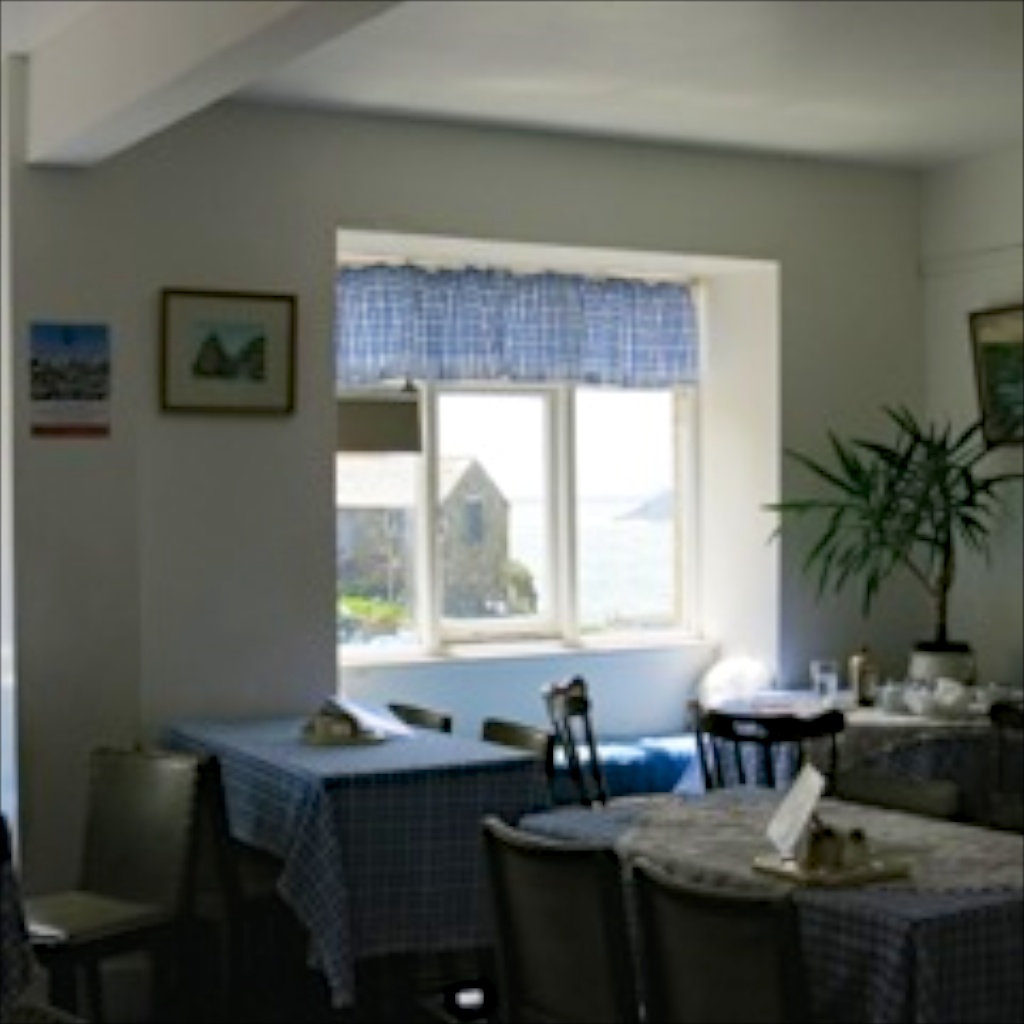 Rugby was unexpectedly the talk of the day when I was there, and, fortunately, other good places to eat.
The single room has been brightened, but kept simple to suit its site and size, with blue-and-white check tablecloths reflecting the seaside theme. And the cakes are as good as they ever were – Victoria sandwich, chocolate sponge, lemon cake, coffee and walnut, carrot – they sit in a tiered cabinet tempting the eye as you enter the room.
Devon
Bovey Tracey
You can walk across the green parkland above the river on the edge of town to Home Farm Café at the National Trust's Parke estate. I first approached the place from the hillside above, passing through a crowd of men with blackened faces and top hats crowned with pheasant feathers. 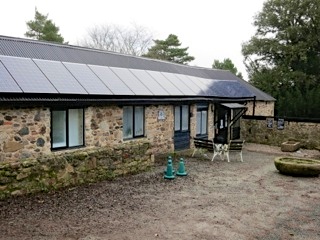 The gathering of Morris dancers was so vividly costumed and eye-catching that I almost missed the apple blossom in the new orchard as I went down the slope to the granite farm buildings behind main house.
The café is in a low building on one side of a small yard. Its entrance is between the open kitchen at one end and the rest of the narrow single room with its wooden tables and chairs. A pine dresser faces the doorway, laden with homemade cakes – chocolate (with a gluten-free option too), lemon drizzle, coffee and walnut, carrot. I could see why there is a stable door at the entrance, as a wet canine face popped up, peering eagerly over the lower half shortly after I went in.
Stripy table cloths, red and white china and fresh flowers give the room a bright cheerful appearance, quite unexpected from its dark granite exterior.
Buckland Monachorum
The scent of the white wisteria surrounded me as I sat at a table outside the Garden House. Before me stretched the first of many small lawns surrounded by shrubs and flowers. Bees hummed in the camassia, busy among the blue and white flowers, and were briefly joined by a hummingbird hawkmoth, its wings blurring with the speed of its movement. To the edge of the view the ground fell away in a vista of rhododendrons towards the walled garden that I first visited many years ago, long before the garden had opened to its full glory.
Behind me in the house the two main rooms of the old vicarage were filled with tables and chairs, and each had a tempting array of cakes on display. Saffron, sticky toffee, sticky ginger, gluten-free chocolate or carrot, I’ve rarely seen such a tempting array of cakes, and all of them are made here, with the selection changing regularly. Add to that scones, rock cakes, Bakewell tart, lemon sponge, apricot and almond slice, and you’ll realise why I spent almost as much time looking at the cakes as I did sitting outside at the table in the sun looking at the flowers.
A word of warning, you can normally only enjoy tea here if you’re visiting the garden. Turning up just for tea means taking your chance of finding the garden quiet – if there’s a coachload of visitors you probably won’t get a free pass for the teashop.
Holne
There’s a hike uphill from the river Dart, 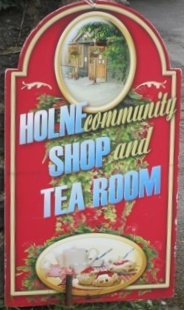 or a winding trek up narrow lanes. Either way when Holne is reached the sound of gently flowing water leads visitors towards the Community Tea Room, almost opposite the church.
Down a steep slope beside the stream is a wooden building,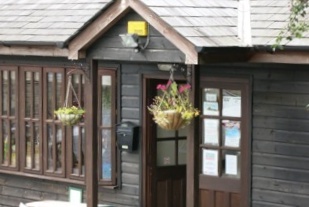 which houses the shop at the front and the tearoom at the back. Both are run by volunteers, who also make the cakes that line the shelves of the glass display case on the tearoom counter.
The gluten-free options here, now of increasing interest to me, included a scrumptious chocolate and orange cake that I couldn’t resist, lemon drizzle cake and scones. But there was chocolate cake in the non-dietary-restricted selection, as well as coffee and walnut, fruit, Victoria sponge, carrot, and treacle tart. 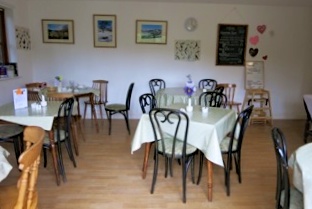 And all are on offer with local clotted cream.
Once a choice has been made, there are round or square tables to sit at, laid with green table clothes with white spots, dark wooden chairs to settle comfortably on, magazines to browse, local photographs to enjoy on the wall.
<Dorset
Shaftesbury
 A hanging sign directs us to the gravelled courtyard between stone stable blocks. The buildings have been converted to The Beggars’ Banquet café, but in sunny weather sitting outside at the mainly wooden benches and tables outside is irresistible. Then the only problem is choosing between the home-made cakes on offer – chocolate, orange polenta, paradise slice, chocolate and almond last time I was there, with an interesting gluten-free selection. There are also a more substantial vegetarian menu.
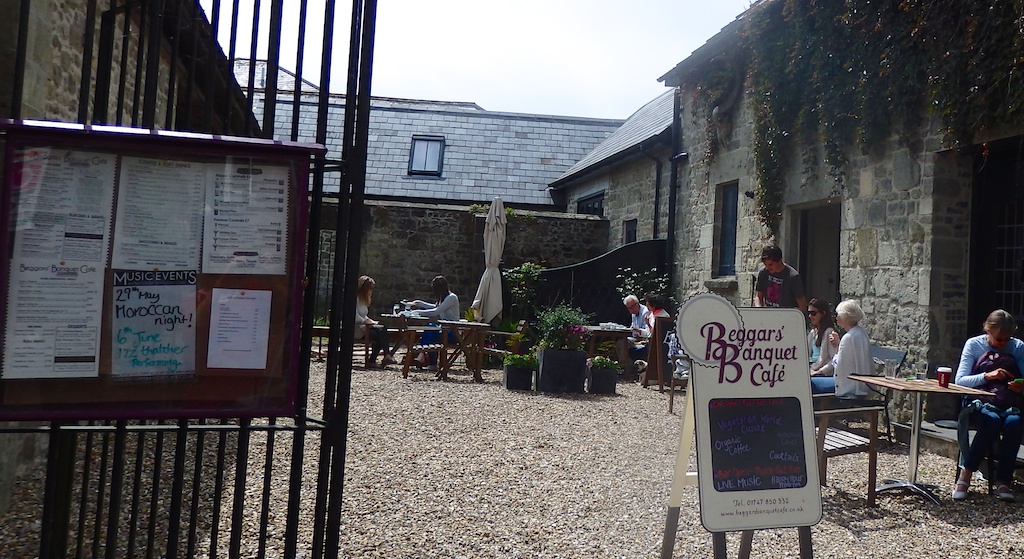
It’s tempting to linger here, somnolent in the heat, enjoying the scent of lavender and the sight of flowering ceanothus, pansies, hellebores.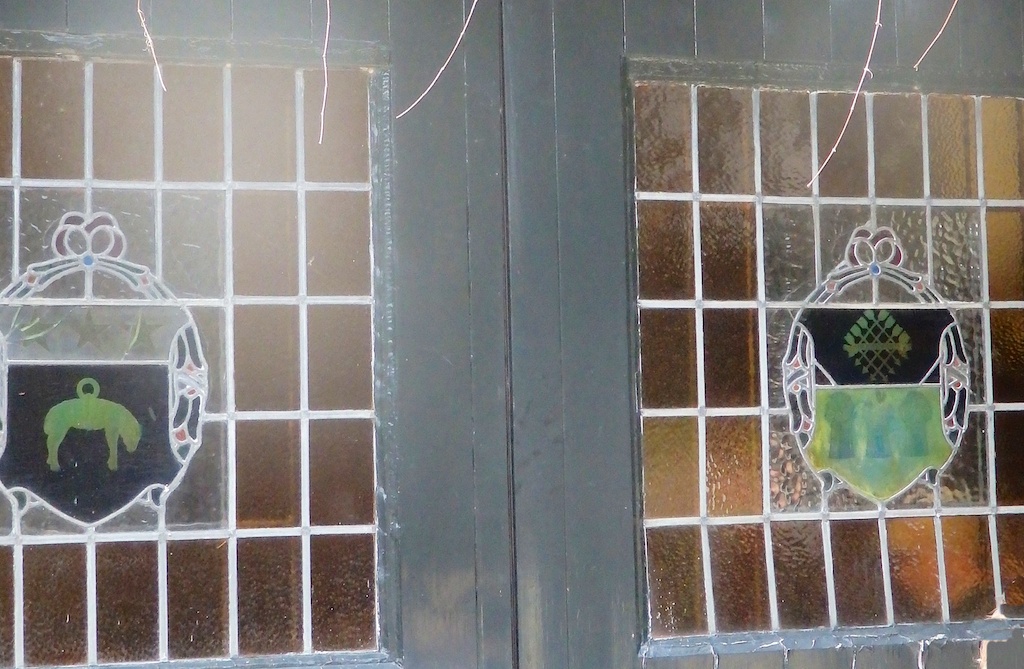 Our eyes lingered on the doors that guard the old entrance into the stables and the birds that popped in and out of the creeper that hangs down over the grey stone walls, and before we knew it the cake had been eaten and we had to resist starting again with another round.
Sherborne
Walk through the doors of Oliver’s Coffee House and find a spot to suit yourself, for the rooms open one out of another, drawing visitors further and further in.
The large table in the front room holds a pile of papers and magazines, so sometimes it’s possible to sit there in silence reading through them, at others a buzz of conversation rises and falls over it. This room with its tiled walls houses the cake counter, which can’t be missed.
Queuing to place an order here it’s possible to range over all the cake choices available, and the selection is impressive. 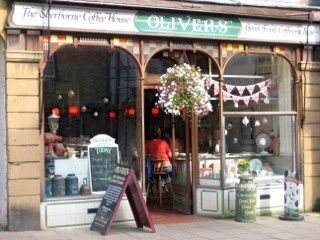 It includes several gluten-free options and starts with slices of tray bakes like lemon and almond cake, passes through madeleines, over scones on to the whole round cakes, served in slices. Last time I was there a rich chocolate sponge sat enticingly just beyond everything else.
If the front room is crowded, or peace and quiet are more appealing, food and drinks can be carried through to the next room. This offers another long central table, but there are also small arched alcoves all around the room for more privacy. The last option is the small back room, sandwiched between the kitchen where the cakes are baked and the cold room where they are stored. Sitting here at one of the individual tables tucked away between high-backed settles, it can be unsettlingly tempting to see supplies being borne past to replenish the cake counter.
The seating choice is almost as varied as the selection of cakes, but the welcoming buzzy atmosphere is the same in all the rooms, and hasn't changed in the many years I've known this place.
Sixpenny Handley
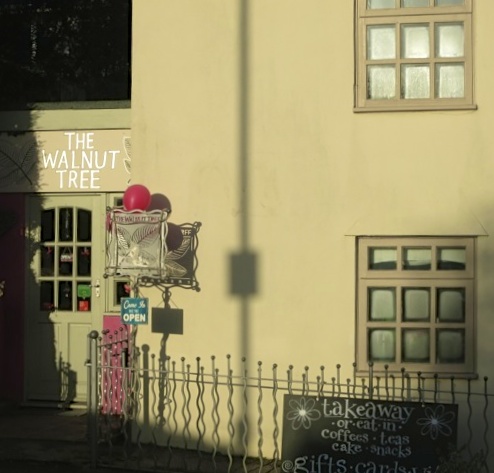 It’s such a lovely name for a village that I couldn’t resist the tea towel with its images of old fingerposts and the imperial name of the village on the boundary sign – 6d Handley.
The tea towel came from The Walnut Tree. This is a tiny shop and café. Truly tiny, with one narrow main room where there are three oilcloth-covered little tables and a few chairs. Round the corner is a comfy sofa and chairs, squeezed into a hidden nook. Between the two places is the counter, with its plates of cakes made by the owner’s friend – chocolate, raspberry and almond, lemon, coffee and walnut. There are sticky flapjacks and scones too.
As I ate my flapjack I listened to dance band music and scanned the shelves lining the wall, which were packed with all kinds of goodies. There was knitwear and jewellery, cards and crafts, pictures, and pottery mugs and plates in lovely shades of blue and brown.
The welcome couldn’t have been warmer. The other customers were locals and walkers, and the general conversation ranged between music and walking routes.
Hampshire
Alresford
Broad Street lives up to its name, short but wide, with an avenue of trees. 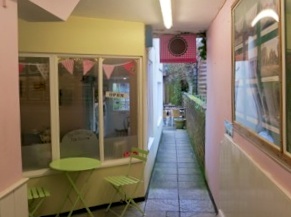 Cottages and Georgian houses line the pavements, mingling with shops and places to eat. Tucked away down a narrow passage is The Courtyard Café, its windows hung with pink bunting.
Two tiny rooms are painted in sugared almond colours, pink and pistachio green, with enamelled 1950s advertising plaques on the walls. The top room houses an oven brought from the old bakery down the road. It seems ideally suited to its new home, where samples of iced celebration cakes stand in tempting display.
Everyday cakes are homemade too, and include award-winning carrot cake with the café's own blend of spices, and chocolate brownies.  My own favourites are the cherry and coconut cake and the savoury tea. This includes a cheese and watercress scone, one of the specialities because of the nearby watercress beds.
The café has leaf tea from Char in Winchester and a selection of books about tea lie around, their covers matching the colour scheme. Outside is a small courtyard, ideal in fine weather, and for those with time to spare there is a fine selection of old photos of Alresford lining the passageway.
Burley, Hampshire
Walk through the New Forest and enter Burley by a track from the east, and the first thing you see through the trees is the black and white frontage of Burley-licious. The colour theme is carried on inside the tiny single room with its four tables and side counter, which all make the most of the available space.
Sitting at one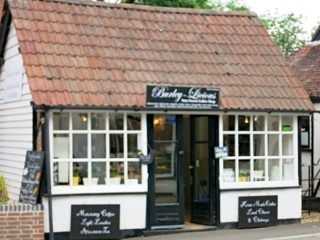 of the tables over a pot of tea from the TeaPigs selection of black, green, fruit or herb, you can see Burley's world go by. Very often this will include ponies coming through from the forest, sauntering calmly down the village street with a queue of cars behind them.
The food display is necessarily limited, but in addition to scones for a New Forest cream tea, there's always a changing selection of homemade cakes. When I was last there the choice was cherry, coffee and walnut, and fruit.
Hartley Wintney
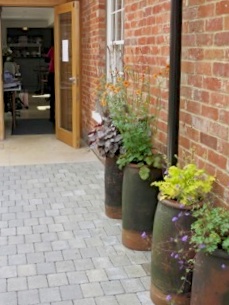
On a warm summer's day The Courtyard Café is definitely the place to be. 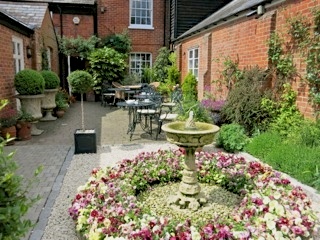 Go through an antique shop on the High Street into the small enclosed courtyard that gives the place its name and find a suntrap, where it's possible to relax, enjoying the flowers in the variety of pots that line the brick walls. Blowsy late tulips hung on the end of long stalks by my table, heuchera was just coming into flower in one of the chimney pots that edged the path.
 Water splashed gently in the fountain in the small circular pond, surrounded in late May by a chaplet of crimson and white pansies.
And even when the weather is not warm enough for outside eating and drinking, there's a newly extended room in the corner. Wood and glass attached to the original room make it light and airy inside, where it feels like a chic Parisian café.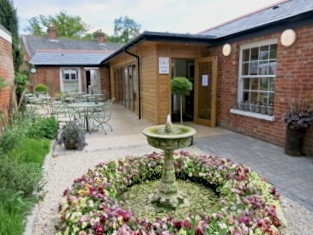 The waitresses are friendly and helpful, nothing is too much trouble, so I always feel very welcome.
And then of course there's the food, which would still bring me here even if I didn't enjoy the surroundings so much. Traditional offerings like Victoria sandwich, chocolate cake, and coffee and walnut cake are complemented by lemon and pistachio cake, Bakewell cake and apple and blackberry crumble cake. There are so many choices that I have difficulty knowing where to start.
Hurstbourne Tarrant
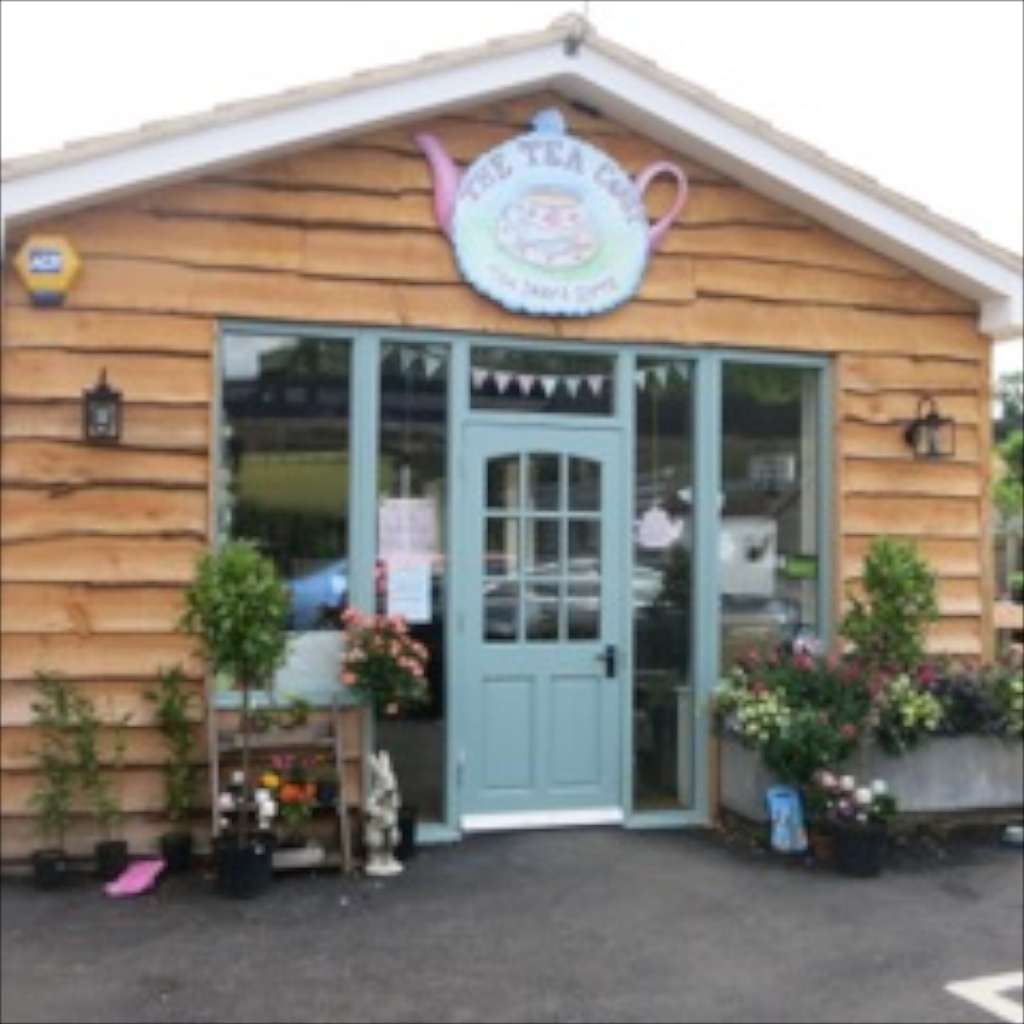 The road winds through the valley, with the winterbourne on one side or the other for most of the way. It passes through one village after another, with pleasant brick houses and flint cottages crowded closely together. Apart from village fetes there was nowhere to stop for tea until recently. And now there is, for The Tea Cosy has arrived.
A timber building tucked away behind the garage, with its own garden to the side, the tall windows at the front offer a tempting view of the interior, where the pale blue of its front door is echoed in other pale shades. 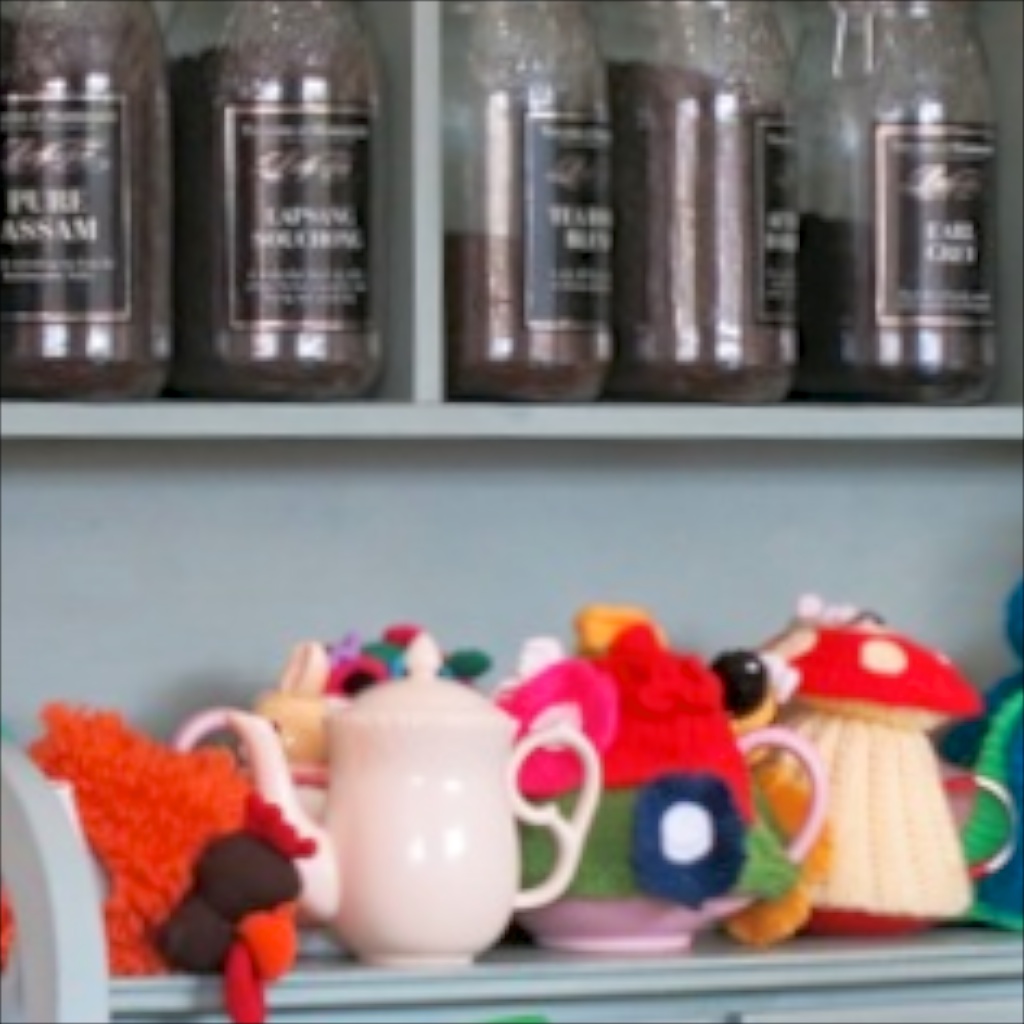 The wooden chairs, different shapes, come in a similar blue, mauve, green, contrasting nicely with the light cream tongue and grooved wood of the walls. There’s even a leather sofa for those who want to subside more completely.
The dresser holds an amusing collection of tea cosies, giving the place its name. There’s a toadstool, and a magnificent hen, in the rows above and below the Kilner jars of fresh tea.
But it’s the counter at the end that really matters, with its display of homemade cakes. Victoria sandwich, carrot cake, apple cake and lemon drizzle as well as scones.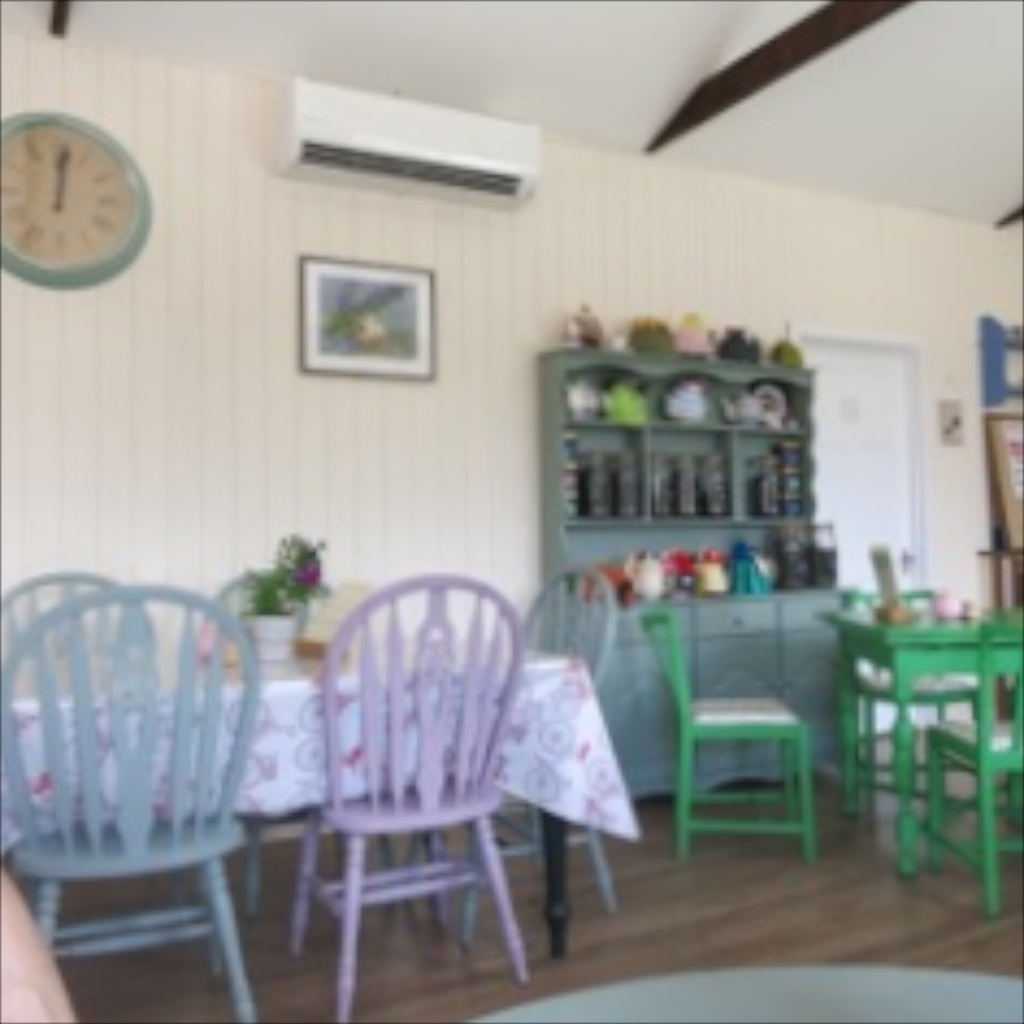 More unusually, there’s also Nutella slice and granola flapjacks. And generally a couple of gluten-free options are on offer.
It’s a light, bright, friendly place, with good cakes and the enticing smell of freshly ground coffee. I hope it’s going to get the patronage it deserves. Dog owners, though, should bear in mind that the garden tables stand on Astroturf – no peeing!
Lyndhurst
The Willow Café is one small room at the end of the New Forest village, but the welcome it offers is huge.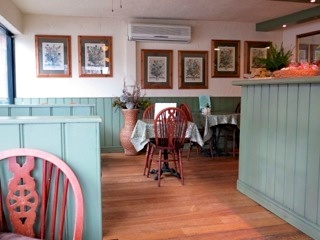 Pale green half-panelling echoes the willow-patterned tablecloths. White walls set off botanical prints. And right in front of the door is the counter, laden with plain and fruit scones, shortbread and cakes, all homemade too.
I first entered the café to the smell of fresh baking,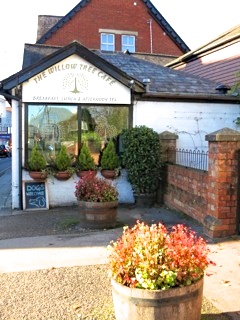 to find a newly-iced coffee and walnut cake just being set out, and a lemon drizzle cake waiting to be iced. Since then I've been back more than once, usually finding different cakes waiting to be sampled.
The café is in an old building, shown looking much the same a century ago in prints on the walls. Then it was a tobacconist, but look closely and you'll see a juvenile monkey puzzle in the garden next door – then look out of the window and see it a hundred years on.
Selborne
The road winds through the village of brick and flint houses and cottages. Above them towers the steep chalk slope known as The Hangers, thickly clad in beech and oak.
The village and its woods were made famous by the eighteenth-century naturalist Gilbert White;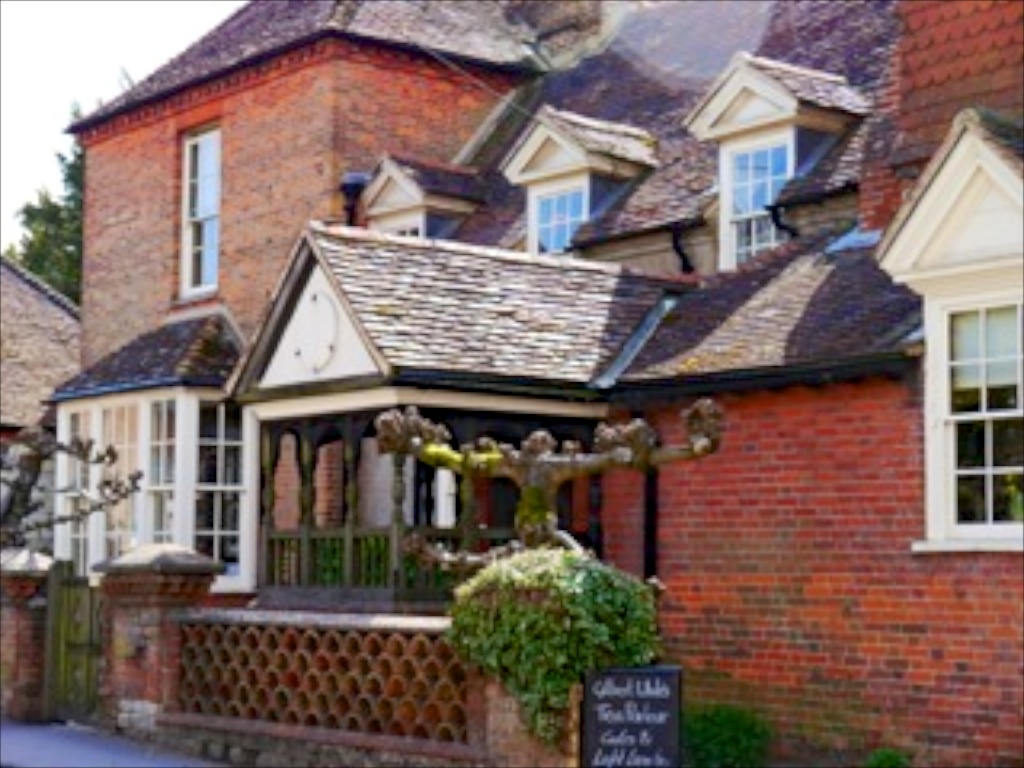 and it's in his house, open to the public, that teas are now offered in Gilbert White's Tea Parlour.
The room itself is at the eastern end of the house, and was added by his brother Benjamin after Gilbert's death. Off-white walls, sage green panelling, and an array of women portraits from different eras create a period atmosphere. It seems that Gilbert could wander in at any moment, murmuring about the arrival of swallows in the spring, peering through the tall bay window to make sure that the limes he planted still screen the old butcher's shop across the lane.
I've known the house and grounds pretty much all my life, and frequently visited the tea parlour in its earliest form. Then the cakes on offer were delicately slanted towards eighteenth-century recipes. Now they definitely favour general modern taste, with Victoria sandwich, coffee and walnut, carrot, lemon drizzle, chocolate, and fruit – and are still good. Most are made by a local baker, but some, especially the few gluten-free options like the Hampshire apple cake, are made here.
My favoured tea here is Gilbert White's High Tea, with the cucumber sandwiches that seem to perfectly suit the ambience.
Sparsholt
It's a grand tea at Lainston House, grand in every sense – setting, view and tea.
It's possible to sit in the bar or drawing room, particularly good in bad weather when there's a roaring fire. But in fine weather it's lovely outside on the top terrace, except in the wasp season. There's a spectacular view down between the lime trees of the long grassy ride in the grounds, where there were once perhaps formal terraced gardens. On clear days the view stretches into the far distance, often hazy in sunlight, with clouds riding slowly across a blue sky, and you speculate about whether or not the Isle of Wight is visible.
Indoors or out, the tea comes in china pots with a strainer. For some reason, this always gives me a sense of idle luxury. The food comes on cake stands – sandwiches, scones, teacakes, individual fancies, tarts, slices. Last time I was here there was a choice of lovely home-made lemon curd or strawberry jam to spread thickly over the scones, with either butter or cream – a great bonus for me as I don't really like cream (on scones, at least).
There's a choice between afternoon tea (which generally means taking a doggy bag home), and the slightly more manageable cream tea. But there's also a very good gluten- and dairy-free option with a wide selection – there were scones and three choices of cake, as well as sandwiches.
This is the kind of tea where I should remember not to have lunch, otherwise I can't have dinner – no space.
Wickham
At the end of Wickham’s wide square stands a cream-painted eighteenth-century house. This is Lilly’s, where homemade cakes meet the eye as soon as you walk through the door. On the last day I visited there was a chocolate cake and a Victoria sponge, both made upstairs in Lilly’s own kitchen, while the scones are made specially by the local baker. They can all be enjoyed as part of the afternoon tea, together with finger sandwiches, everything in extremely generous portions. These were delicious cakes, and the sandwiches too were exceptionally good, especially the ones with home-cooked chicken.
All this is eaten in the long-beamed room that is entered through an arched doorway on the right. Presumably once two Georgian rooms, now mainly painted in white with part-panelling in pale grey, there are fireplaces at either end – one for use, the other that I sat beside filled with logs.
The square or rectangular pine tables and chairs with red gingham cushions saw a lot of use in the time I was there. Friends came to meet up, parents brought their children after school, and it was particularly pleasant to see how much local people used the place.
For those, like me, who were new to the experience, the views through the narrow sash windows of the street and the square drew the eye. This is not a town I’ve been to before, and I was only here now as a consolation treat after losing my dear old collie. But now I’ve found it I can understand why the friends who sent me here knew that I’d like it. I’ll be back to explore the town, with its mediaeval and Georgian houses. And of course next time I won’t have lunch before taking tea at Lilly’s.
Winchester
Char is a tiny shop, its grey frontage reflecting the silver packages that pack the shelves inside. It's a treasure-trove for tea lovers, who are instantly assailed by fragrance when they open the door.
I was first tempted in by the best Earl Grey mixture that I've found in years. And by their China Rose, which I like at breakfast time. But recently I've experimented with their green and white teas, and become converted to them. I breathe in the scent of Jasmine White Pearl and Jasmine Silver Needle when they are first brewed, and feel an instant lift. It was here at Char, in a line of shops opposite Winchester's Guildhall, that I was first told how to make green tea properly.
Wiltshire
Tisbury
The gardeners who worked over the centuries in the walled garden at Pythouse would feel at home if they appeared here today. There are still vegetables, fruit, flowers, all flourishing between the brick walls. But the gardeners of yore would be amazed at the sight of their old potting sheds, converted now to one long room, rafters garlanded with dried hops, which became the original café with a wonderful view out of the end window.
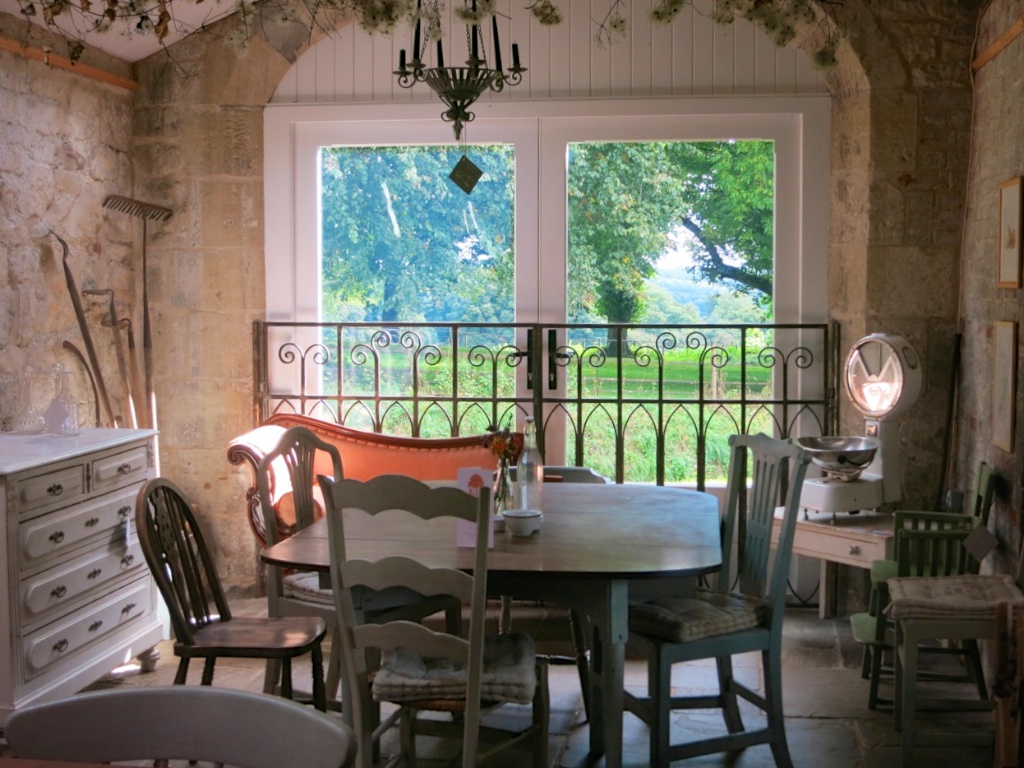
The recent addition of a conservatory has extended the space – and the view. I sat at one of the wooden tables, comfortable on a cushioned wooden chair, and in front of me spread the kitchen garden.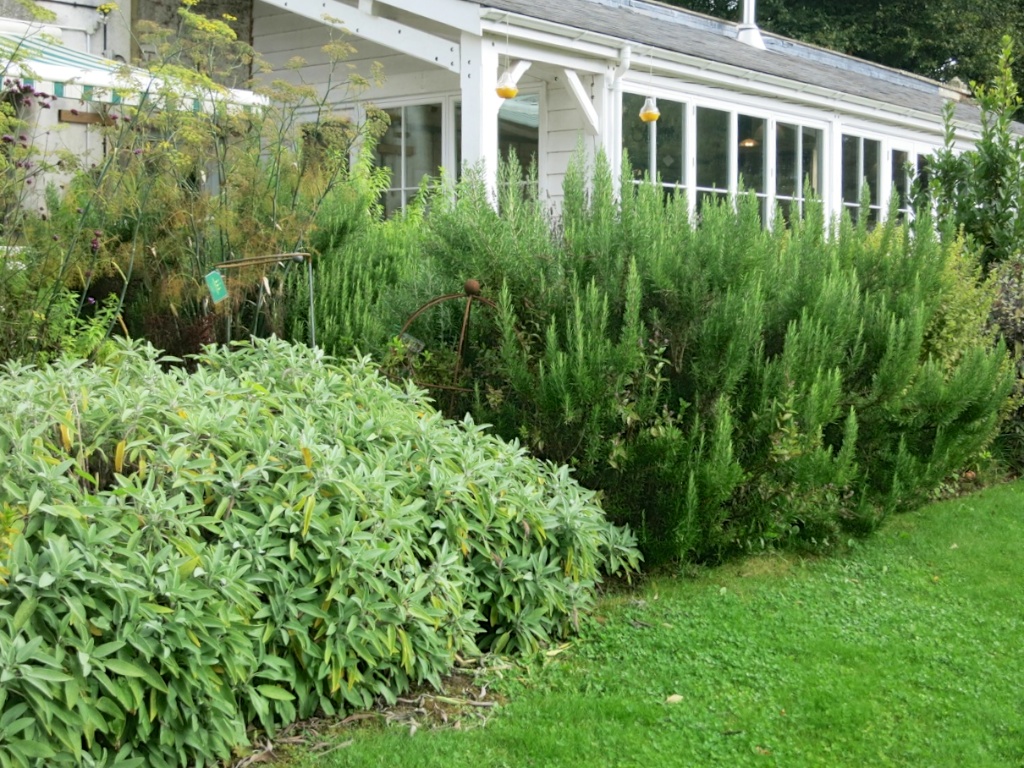 Late apricot roses warmed the row of bushes in front of the windows, and beyond were stands of yellow-headed fennel. Bumble bees clambered awkwardly over the still-flowering heads of lavender by the French windows, and the nearby beds of herbs were still luxuriant.
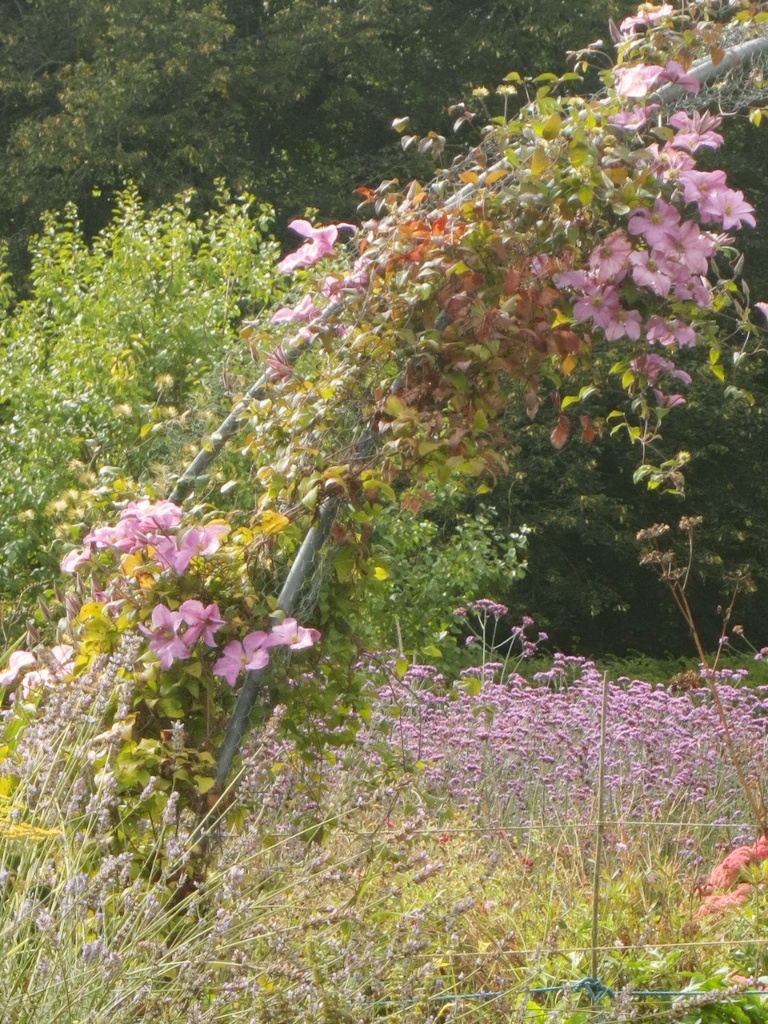
 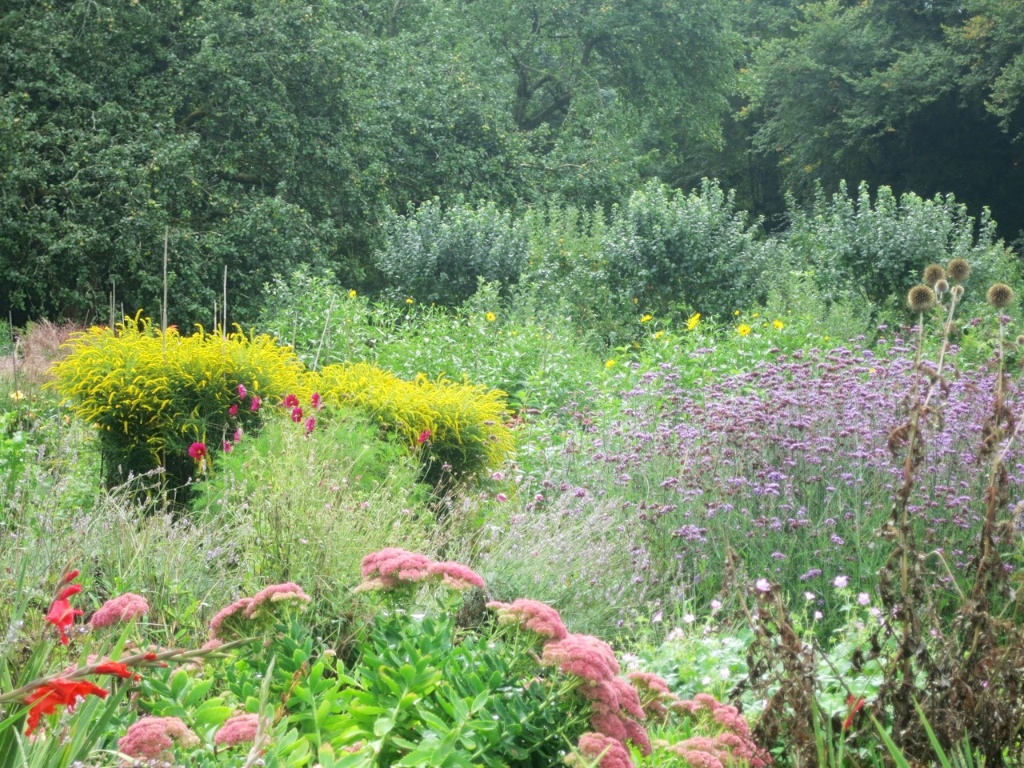 Scarlet globes in the apple trees gleamed like Christmas tree decorations and dahlias added a variety of colours. A mauve clematis draped over an arch framing a view of everlasting purple statice edged with firework bursts of golden rod.
Inside the gardeners’ old sanctum, home-made cakes are piled on the end of the counter. There are the standard Victoria sandwich, bursting with buttercream and jam, and lemon drizzle cake, crusted thickly with bittersweet crystals. Plum and ginger was an interesting variation on apple upside-down cake combined with gingerbread, using the current crop of fruit from the garden. And the gluten-free offering was lemon and blueberry polenta cake, plus rich chocolate brownies.
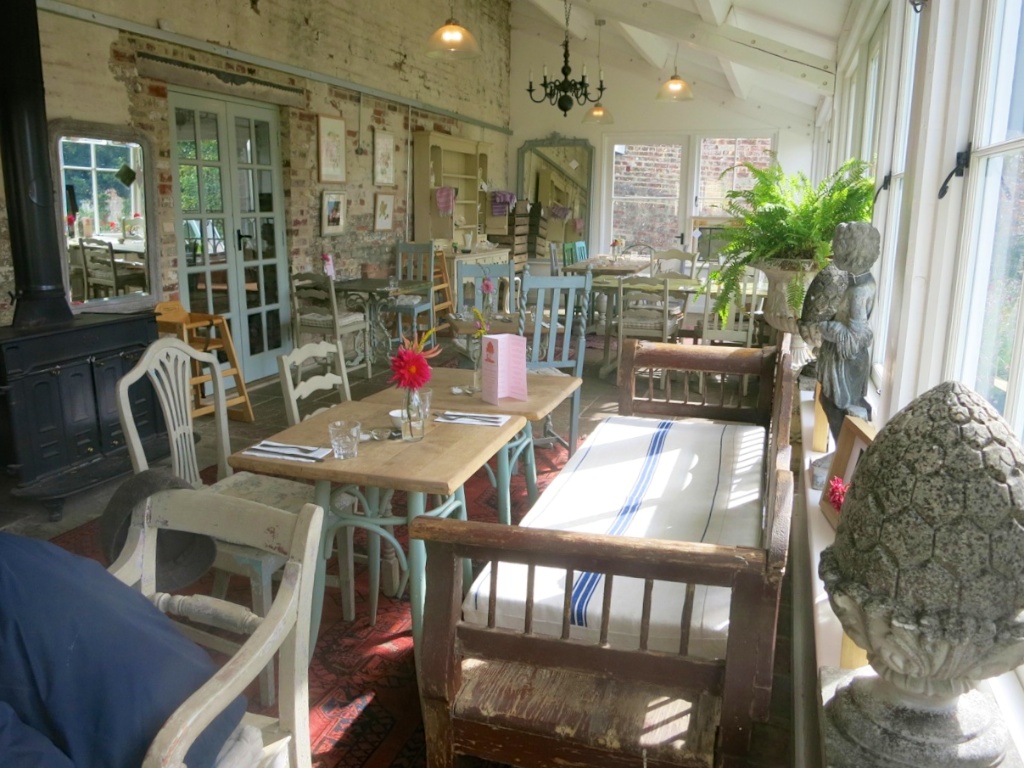
It’s peaceful and relaxing to have cake and tea brought to the conservatory, to choose between the variety of wooden furniture to sit on, to scan the contents of the dressers, to skim through the books and magazines. And to eat and drink as if we were outside at one of the collection of tables and chairs there, enjoying the view, but avoiding the wasps and staying beautifully warm in the sunlit room, without feeling the chilly autumn wind outside.